
How Does the Forex Market Work? Structure Explained
October 31, 2026

There is no forex building. No trading floor, no bell, no exchange address you could visit. The market you are about to trade exists entirely as a network of institutions quoting prices to each other, around the clock, across the planet. Understanding that structure explains almost everything else — including why your spread widens at 3am.
In Lesson 1 we established what forex is. This lesson covers how it actually operates: where prices come from, how your order reaches the market, and why the same currency pair can be violently active at one hour and completely dead at another.
A market with no central exchange
When you buy a share of Apple, your order goes to a specific place — the NASDAQ. There is one order book, one official price, and one closing bell. Everyone sees the same number.
Forex works nothing like that. It is an over-the-counter (OTC) market, which means trades happen directly between two parties rather than through a central exchange. There is no single official price for EUR/USD. There are thousands of prices, quoted simultaneously by different institutions, all sitting within a fraction of a pip of each other because competition keeps them aligned.
This sounds chaotic, and in the 1980s it genuinely was. Today electronic networks connect these participants so tightly that the difference between the best and worst quote for a major pair is usually negligible. But the underlying structure has not changed — you are always trading against a counterparty, not into a central pool.
This matters practically. It is why two brokers can show slightly different prices for the same pair at the same moment, and why your fill price is quoted by your broker rather than by “the market.”
The four layers of the forex market
Picture the market as a pyramid, with liquidity flowing downward from the largest participants to the smallest.
Layer 1 — The interbank market
At the top sit the world’s largest banks — institutions like JP Morgan, Deutsche Bank, Citi and UBS. They trade enormous volume directly with each other through electronic broking systems, and between them they effectively establish the baseline rate for every major currency pair.
These banks are market makers in the truest sense: they quote both a price to buy and a price to sell, continuously, and profit from the difference. A single interbank transaction can run into hundreds of millions of dollars.
Layer 2 — Central banks and governments
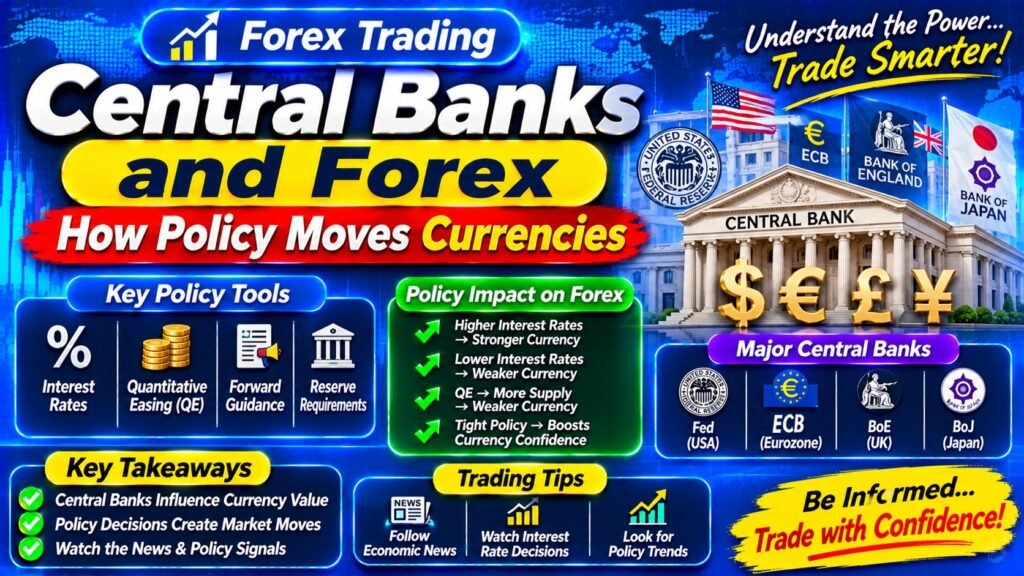
Central banks are the most influential participants in the entire market, and they are not trying to make money.
The Federal Reserve, European Central Bank, Bank of England and Bank of Japan set interest rates, manage money supply and occasionally intervene directly in currency markets to defend or weaken their own currency. When a central bank changes rates — or even hints at changing them — currencies reprice instantly.
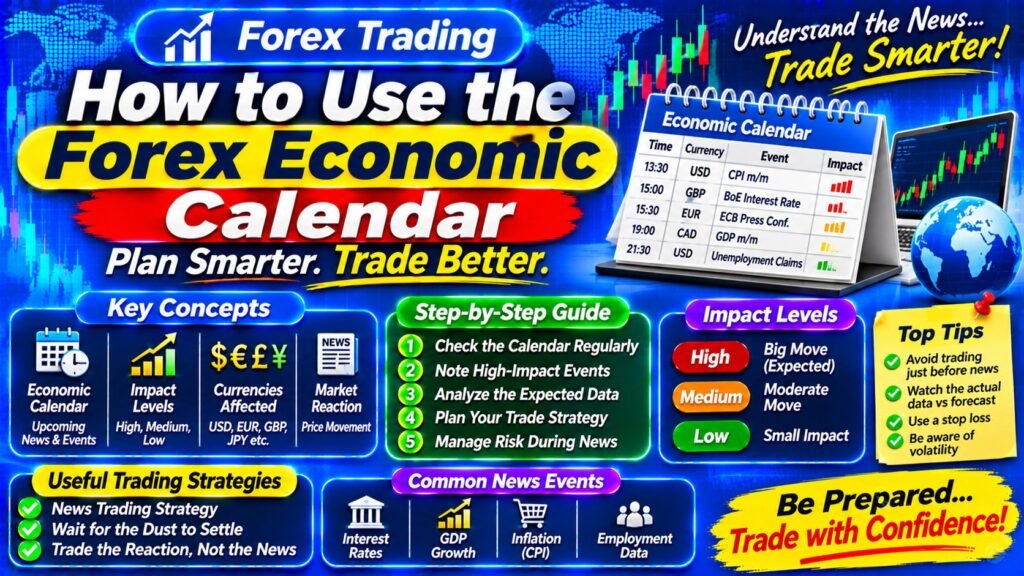
This is why economic calendars matter. A rate decision can move a major pair a hundred pips in minutes, and no amount of chart analysis will predict the decision itself.
Layer 3 — Institutions and corporations
Below central banks sit hedge funds, asset managers, insurance companies and multinational corporations.
Some are speculating. A macro hedge fund taking a large position on the yen is doing exactly what you are doing, just with far more capital and research. Others are not speculating at all: a manufacturer converting export revenue from dollars back into its home currency simply needs the exchange to happen. It has no view on direction.
That distinction matters. A significant share of daily forex volume comes from participants with no interest in price direction whatsoever — they just need currency converted. Their orders still move price.
Layer 4 — Retail traders and brokers
At the base sit retail traders, reaching the market through brokers. Your broker aggregates orders from thousands of clients and either passes them upstream to liquidity providers or handles them internally.
Retail trading represents a small percentage of total forex volume. That is not a weakness — it is why you can enter and exit positions without ever moving the market against yourself. A hedge fund closing a large position has to worry about slippage. You do not.
How your order actually reaches the market
When you click buy on MT4 or MT5, a specific sequence happens in well under a second.
1. Your platform sends the order to your broker
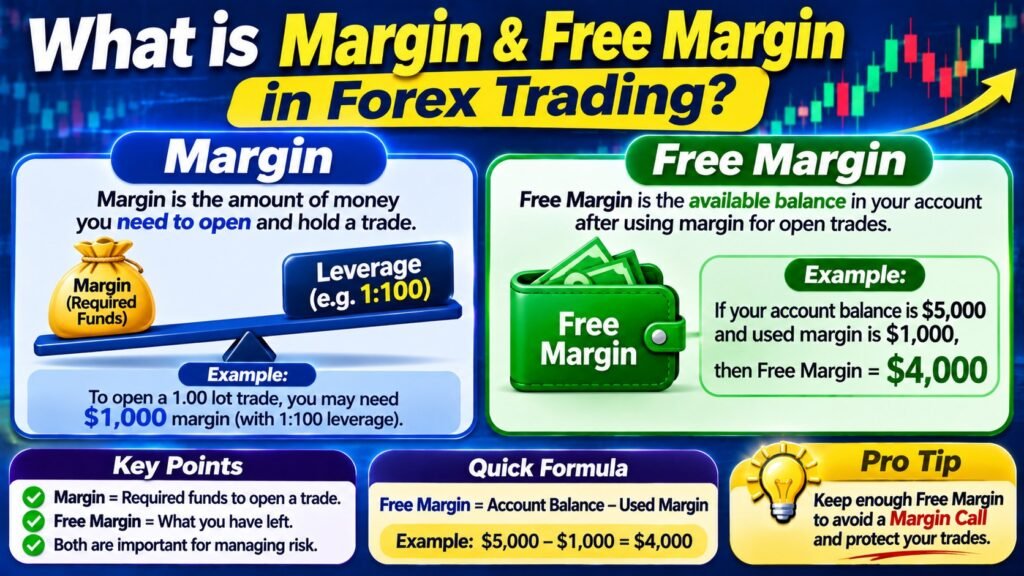
2. Broker checks margin and validates the order
3. Broker routes it — internally or to liquidity providers
4. Order is matched at the best available price
5. Confirmation returns to your terminal
Total elapsed time: typically 50–300 milliseconds
Step three is where broker models differ, and it is worth understanding because it affects your costs.
Some brokers operate a dealing desk model, taking the opposite side of your trade internally. Others use an STP or ECN model, passing orders directly to external liquidity providers and earning through commission or a small spread markup.
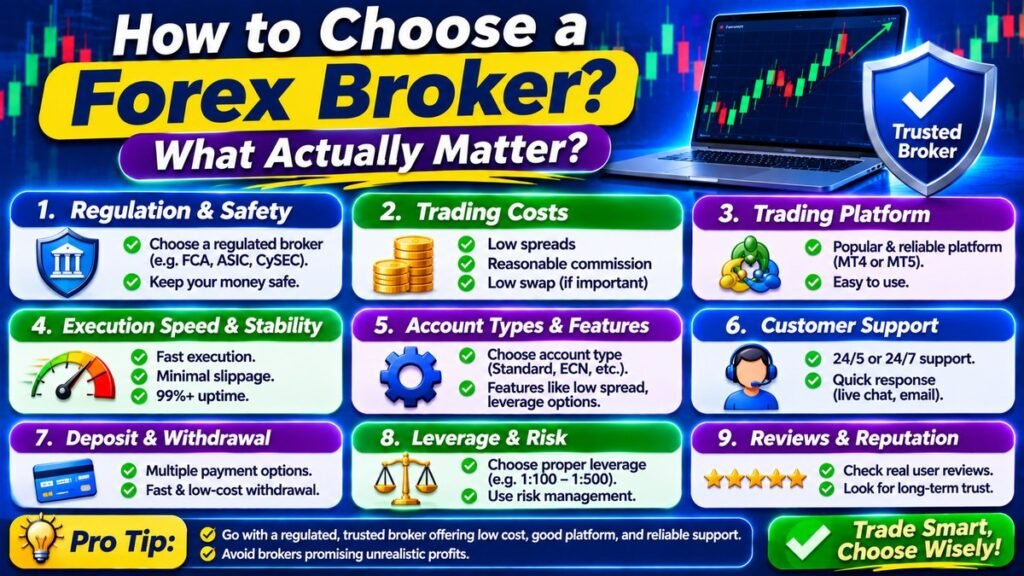
Neither model is automatically better or worse, despite what marketing often claims. What matters far more is whether your broker is properly regulated, executes reliably during volatile conditions, and processes withdrawals without friction. We cover how to evaluate this properly in Lesson 11.
Why prices move
Every price movement in forex comes down to one thing: an imbalance between buyers and sellers. When more capital wants to buy euros than sell them, EUR/USD rises. That is the entire mechanism.
What creates those imbalances is more interesting. Broadly, four forces:
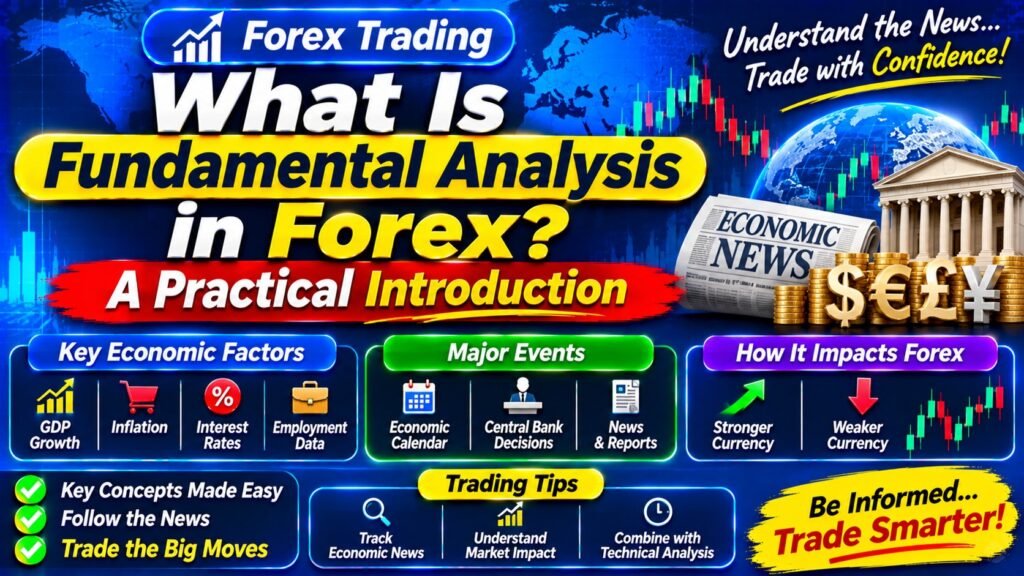
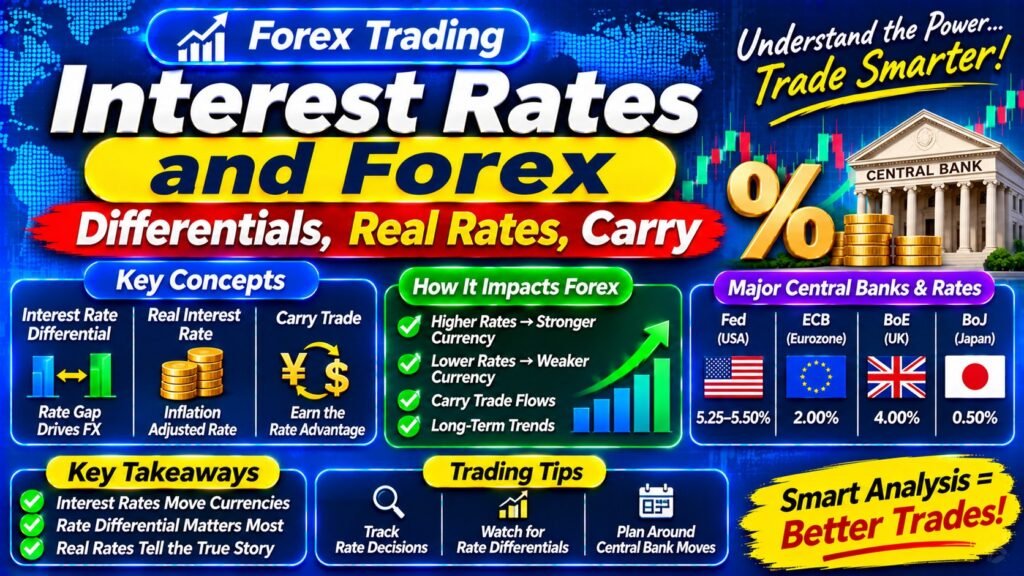
Interest rates. Capital flows toward higher yields. When a central bank raises rates, holding that currency becomes more attractive, and demand rises. This is the single most powerful long-term driver in currency markets.
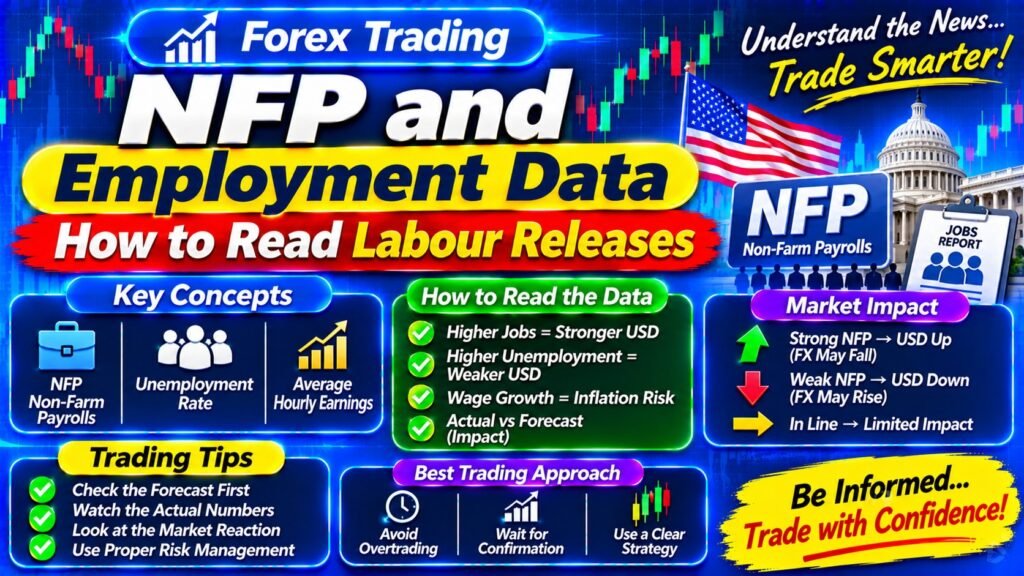
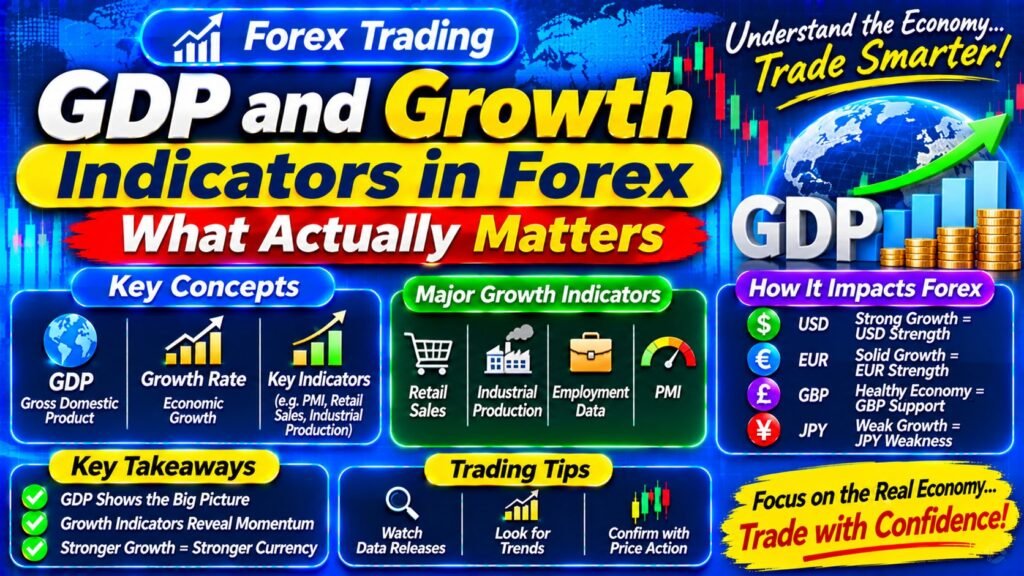
Economic data. Employment figures, inflation readings, GDP growth and retail sales all shape expectations about future interest rates. The data itself matters less than whether it beat or missed what the market expected.
Risk sentiment. During uncertainty, capital moves toward currencies perceived as safe — historically the US dollar, Swiss franc and Japanese yen. During optimism, it flows toward higher-yielding and commodity-linked currencies like the Australian dollar.
Positioning and flow. Sometimes price moves simply because a large participant needs to transact. Month-end rebalancing by funds routinely produces movements that have nothing to do with economics at all.
Worth understanding early
Markets react to surprise, not to news. If every economist expects a rate cut and the central bank cuts, the currency may barely move — that outcome was already priced in. If they hold instead, the reaction can be violent. This is why beginners are often confused when “good news” sends a currency lower.
The four trading sessions
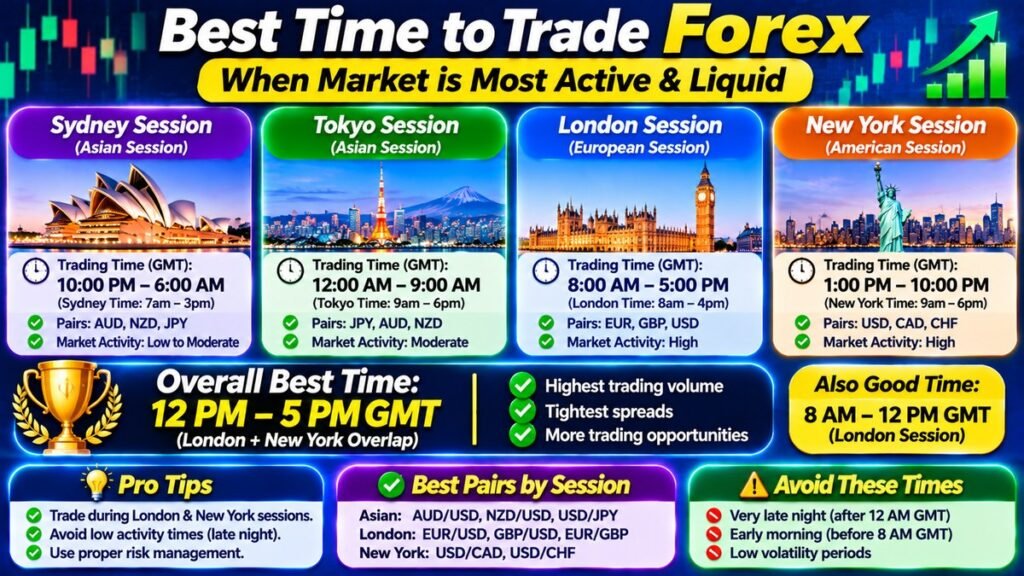
Because the market follows the working day around the globe, activity concentrates in four regional sessions.
| Session | Hours (GMT) | Character |
|---|---|---|
| Sydney | 22:00 – 07:00 | Quiet. Thin liquidity, wider spreads. |
| Tokyo | 00:00 – 09:00 | Moderate. Yen pairs most active. |
| London | 08:00 – 17:00 | Highest volume. Major pairs move. |
| New York | 13:00 – 22:00 | High volume. US data releases. |
The critical window is where London and New York overlap, roughly 13:00 to 17:00 GMT. Both of the world’s largest financial centres are open simultaneously, liquidity peaks, spreads tighten and the majority of meaningful daily movement occurs.
Equally important is what happens outside these windows. During the late Sydney session, liquidity is thin, spreads widen and price can move erratically on relatively small orders. Many beginners lose money not because their analysis was wrong but because they traded during hours that could not support their strategy. Lessons 13 and 14 cover session timing in full.
What this means for how you trade
The structure above is not academic. It has direct consequences for your decisions.
Because the market is decentralised, your broker’s execution quality genuinely matters — more than most beginners assume. Two traders with identical strategies can produce different results based purely on spread and slippage.
Because central banks dominate, you need an economic calendar open. Being in a position during an unexpected rate decision is not trading, it is exposure to a coin flip.
Because liquidity varies by session, when you trade is as important as what you trade. The same setup on the same pair behaves differently at 14:00 GMT than at 02:00 GMT.
And because so much volume comes from participants who are not speculating at all, price will sometimes move for reasons no chart can explain. This is normal. It is also why risk management exists — not to predict those moments, but to survive them.
A pattern I see repeatedly
New traders often assume that if they study charts hard enough, they can eliminate uncertainty. You cannot. In twelve years of analysing these markets I have never found a method that removes the unpredictable element — only methods that keep it survivable. The traders who last are the ones who accepted this early rather than fighting it for years.
What to do next
You now understand how the market is structured, where prices originate and why movement concentrates in certain hours.
In Lesson 3 we look at currency pairs in detail — how they are quoted, what base and quote currency actually mean, and why major pairs behave so differently from exotic ones. This is the point where the charts start making concrete sense.
Frequently asked questions
Who sets the price in forex if there is no exchange?
Prices emerge from competition between major banks quoting to each other in the interbank market. Your broker sources prices from liquidity providers and passes them to you, usually with a small markup. Because competition is intense, quotes from different institutions stay within a fraction of a pip of each other.
Why do spreads widen at certain times?
Spreads reflect liquidity. During the London–New York overlap, many participants are quoting and spreads are tight. During the late Asian session or immediately before major news, fewer institutions are willing to quote aggressively, so the gap between bid and ask widens. This is normal market behaviour, not your broker penalising you.
Does the forex market close on weekends?
Yes. Trading closes Friday evening when New York finishes and reopens Sunday evening when Sydney begins. Prices can still move over the weekend in response to news, which sometimes produces a gap between Friday’s close and Monday’s open. Holding positions over a weekend carries this specific risk.
What is the difference between a dealing desk and an ECN broker?
A dealing desk broker may take the opposite side of your trade internally. An ECN or STP broker routes your order to external liquidity providers and earns through commission or spread markup. Neither is inherently better. Regulation, execution reliability and withdrawal processing matter far more than the model label.
Can I trade forex 24 hours a day?
Technically yes, from Sunday evening to Friday evening. Practically, no — you should not. Liquidity varies enormously by session, and trading during thin hours means wider spreads and more erratic price behaviour. Choosing specific hours that suit your strategy is one of the simplest improvements a new trader can make.
Why does a currency sometimes fall on good economic news?
Because markets price expectations, not outcomes. If strong data was already anticipated, the move happened before the release. If the data was strong but weaker than expected, the currency can fall despite being objectively positive. Always check the forecast figure alongside the actual figure.