
How Currency Pairs Work — Major, Minor and Exotic Explained
October 31, 2026

EUR/USD at 1.0850 tells you something specific: it takes 1.0850 US dollars to buy one euro. Once that single sentence clicks, every chart you will ever look at becomes readable. Until it does, everything else in trading stays slightly out of focus.
This lesson covers how currency pairs are structured and quoted, the difference between majors, minors and exotics, and which ones you should actually be trading as a beginner. It is short, but it is the piece most self-taught traders get half-wrong and never revisit.
Base currency and quote currency
Every pair has two halves, and their order is not arbitrary.
The base currency comes first. It is always worth exactly one unit. The quote currency comes second, and the price tells you how many units of it are needed to buy one unit of the base.
EUR/USD = 1.0850
Base currency: EUR (always 1)
Quote currency: USD
Meaning: 1 euro costs 1.0850 dollars
So when the number rises, the base currency is strengthening against the quote currency. When it falls, the base is weakening. EUR/USD moving from 1.0850 to 1.0920 means the euro gained ground on the dollar.
Buying a pair means buying the base and selling the quote. Selling a pair means the reverse. There is no third option — you are always simultaneously long one currency and short another.
Reading it in practice
Say you believe the US dollar is about to strengthen significantly. You have two ways to express that view:
Where the dollar is the quote currency — EUR/USD, GBP/USD, AUD/USD — you would sell the pair. A stronger dollar pushes those numbers down.
Where the dollar is the base currency — USD/JPY, USD/CHF, USD/CAD — you would buy the pair. A stronger dollar pushes those numbers up.
This trips up almost every beginner at least once. Take a moment with it now rather than discovering it mid-trade.
The three categories of currency pairs
Major pairs
Majors are the most heavily traded pairs in the world. All of them include the US dollar, because the dollar sits on one side of roughly 88% of all forex transactions.
| Pair | Nickname | Typical spread |
|---|---|---|
| EUR/USD | Fiber | 0.1 – 1.0 pip |
| USD/JPY | Gopher | 0.2 – 1.2 pips |
| GBP/USD | Cable | 0.4 – 1.8 pips |
| USD/CHF | Swissy | 0.5 – 2.0 pips |
| AUD/USD | Aussie | 0.4 – 1.5 pips |
| USD/CAD | Loonie | 0.5 – 2.0 pips |
| NZD/USD | Kiwi | 0.6 – 2.2 pips |
Majors offer the tightest spreads, the deepest liquidity and the most available analysis. They also respond predictably to economic data, which makes them easier to study.
This is where every beginner should start. Not because the others are forbidden, but because majors give you the cleanest possible environment to learn in — narrow costs, reliable execution, and enough published research to check your reasoning against.
Minor pairs (crosses)
Minors exclude the US dollar entirely. EUR/GBP, EUR/JPY, GBP/JPY and AUD/JPY are common examples.
They are still liquid, but less so than majors, which means slightly wider spreads. Some crosses are also considerably more volatile — GBP/JPY in particular has a reputation among traders for fast, wide swings that can blow through a stop if you are positioned too large.
Crosses become useful once you can read two economies at once. Trading EUR/GBP means forming a view on the eurozone and the UK simultaneously. That is genuinely harder than it sounds.
Exotic pairs
Exotics pair a major currency with one from a smaller or emerging economy — USD/TRY, USD/ZAR, USD/MXN, EUR/PLN.
Three things make them difficult: spreads can run ten to fifty times wider than EUR/USD, liquidity can vanish during stress, and they respond to domestic political events that are hard to follow from abroad.
Honest advice
Exotic pairs are marketed to beginners as opportunities because they move a lot. Movement is not opportunity when the spread eats a meaningful share of your profit before the trade even starts. In my experience, traders who begin with exotics almost always migrate back to majors — usually after an expensive lesson. Skip that step.
Gold and other non-currency instruments
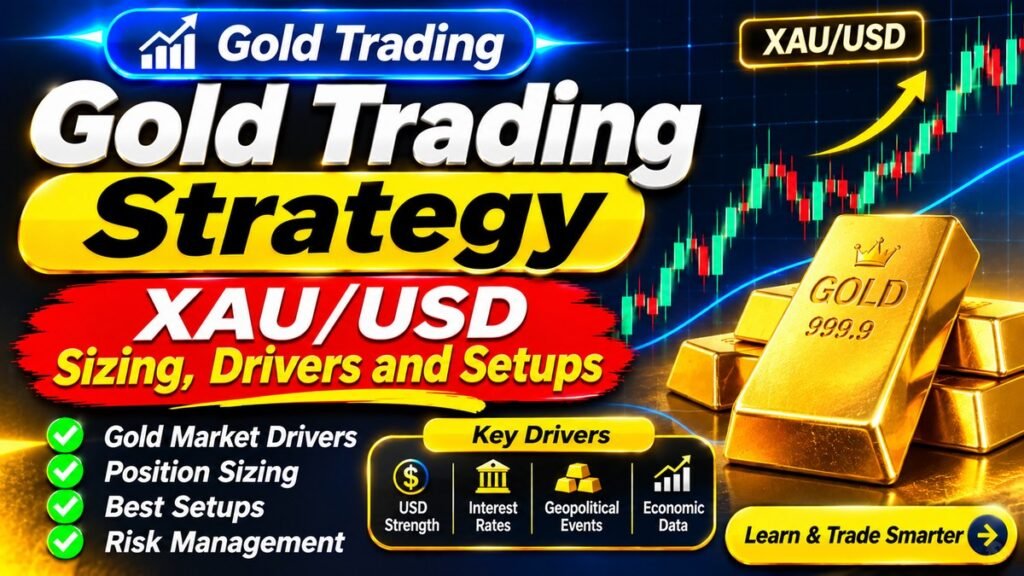
You will see XAU/USD on your platform alongside currency pairs, and it follows the same logic — XAU is the ticker for one ounce of gold, priced in US dollars. XAU/USD at 2,310 means one ounce costs $2,310.
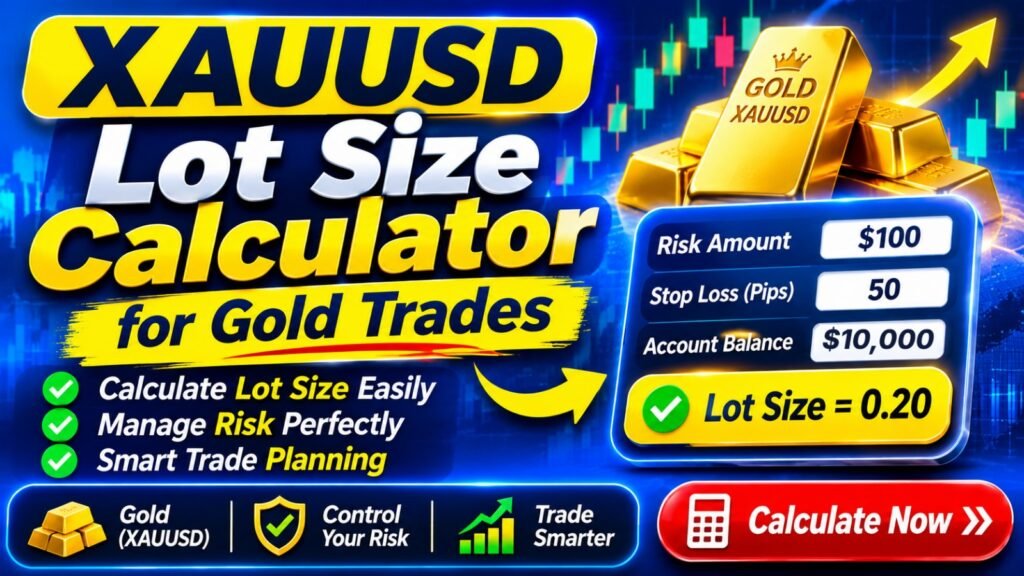
Gold behaves differently from currencies. It responds to inflation expectations, real interest rates, geopolitical tension and dollar strength rather than to a single country’s economic data. It also moves in larger daily ranges than most major pairs, which means position sizing needs adjusting rather than copying whatever you use on EUR/USD.
Gold is a major focus of our own analysis and signals, and it is a market I have traded for most of my career. But it is not a beginner instrument — the volatility that makes it attractive is the same volatility that punishes oversized positions. Learn on majors first.
How many pairs should you actually trade?
Your platform will offer somewhere between forty and two hundred instruments. This is a trap disguised as choice.
The traders I have seen develop consistency almost universally narrowed down rather than expanded. Two to four pairs, studied properly, beats twenty pairs watched superficially — every time.
There is a practical reason for this. Each pair has its own personality: typical daily range, how it behaves around news, which sessions it moves in, how it reacts at round numbers. That knowledge takes months to build and cannot be built across twenty instruments at once.
A reasonable starting set
EUR/USD for its tight spread and clean technical behaviour. GBP/USD for slightly more movement once you are comfortable. Add XAU/USD later, only after you have proven you can size positions correctly. That is genuinely enough for your first year.
Correlation — why your trades may not be independent
One thing that surprises new traders: many pairs move together, because they share a currency.
EUR/USD and GBP/USD are strongly positively correlated. Both have the dollar as the quote currency, so dollar strength pushes both down simultaneously. If you buy both, you have not diversified — you have doubled a single bet against the dollar.
EUR/USD and USD/CHF typically move in opposite directions, because the dollar sits on opposite sides of each pair.
This matters for risk. A trader who believes they are risking 1% on each of three positions may actually be risking 3% on one underlying view. That is how accounts get damaged by what looked like careful position sizing. We return to this properly in Lesson 5.
What to do next
You can now read any pair on your platform and know instantly what the number means and which currency you are betting on.
Lesson 4 covers the pip — the unit those numbers move in, and the foundation of every risk calculation you will ever make. It is a short lesson, but skipping it makes everything after it harder than it needs to be.
Frequently asked questions
Which currency pair is best for beginners?
EUR/USD. It has the tightest spreads of any pair, the deepest liquidity, and more published analysis than any other instrument. It also tends to respect technical levels more cleanly than volatile crosses, which makes it a better environment for learning what works and what does not.
What does it mean to be long or short a currency pair?
Going long means buying the pair — buying the base currency and selling the quote currency, expecting the base to strengthen. Going short means selling the pair, expecting the base to weaken. In forex you can go short as easily as long, with no additional restrictions.
Why do some pairs have four decimal places and others only two?
Pairs involving the Japanese yen are quoted to two or three decimals because of the yen’s numerical scale — USD/JPY trades around 156, not 1.56. All other major pairs quote to four or five decimals. This affects how you calculate pip value, which Lesson 4 covers in detail.
Can I trade exotic pairs as a beginner?
You can, but there are few good reasons to. Spreads on exotics are often ten to fifty times wider than EUR/USD, meaning each trade starts at a significant disadvantage. They also react to domestic political events that are difficult to monitor from outside the country. Majors offer better conditions for learning.
What does XAU/USD mean?
XAU is the standard ticker for one troy ounce of gold. XAU/USD shows the price of that ounce in US dollars. It trades on forex platforms alongside currency pairs and uses the same mechanics, though it responds to different drivers — inflation expectations, real rates and geopolitical risk rather than a single country’s data.
How many currency pairs should I watch?
Two to four, especially in your first year. Each pair has distinct behaviour that takes months to learn properly, and that learning does not transfer well between instruments. Traders who narrow their focus tend to develop consistency faster than those who monitor everything available.