
Forex Trading Hours — London, New York, Tokyo, Sydney
October 31, 2026

The same strategy, on the same pair, produces different results at different hours. Not because the strategy changes, but because liquidity does. A trader who learns nothing else about sessions but simply stops trading during dead hours will usually see an immediate improvement in results.
This lesson covers the four trading sessions, what actually happens in each, and how to identify the hours that suit your strategy and your schedule.
Why sessions exist
The forex market has no central exchange, so it never formally opens or closes. What creates sessions is human working hours.
Banks, funds and corporations trade during their local business day. As Tokyo’s working day ends, London’s begins. As London winds down, New York is in full flow. Liquidity follows the sun, and price behaviour changes with it.
The week runs from Sydney’s open on Sunday evening to New York’s close on Friday evening. In between, the market is continuously open but far from continuously active.
The four sessions
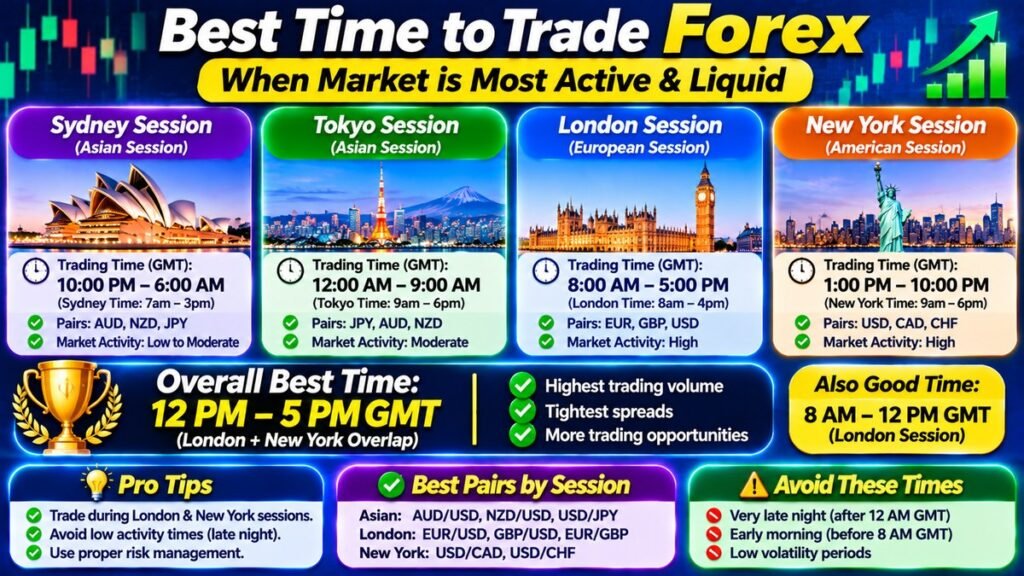
All times below are GMT. Note that London and New York observe daylight saving, so the overlap shifts by an hour twice a year.
| Session | Hours (GMT) | Share of volume |
|---|---|---|
| Sydney | 22:00 – 07:00 | ~5% |
| Tokyo | 00:00 – 09:00 | ~16% |
| London | 08:00 – 17:00 | ~38% |
| New York | 13:00 – 22:00 | ~18% |
Sydney — the quiet open
The week begins here. Volume is thin, spreads are at their widest, and movement is generally limited.
The one exception worth knowing is the Sunday open itself. After a weekend of news with no ability to trade, price can gap from Friday’s close. If you hold positions over the weekend, this is the specific risk you are carrying.
For most traders, Sydney is not a productive session. The conditions that make it quiet — thin liquidity, wide spreads — work against nearly every retail strategy.
Tokyo — Asian range building
Tokyo brings the first meaningful activity. Yen pairs are most affected, along with AUD and NZD crosses.
The characteristic behaviour is range formation. Asian sessions often establish a narrow range that later sessions break out of, which is why some traders mark the Asian high and low as reference levels for the London open.
Tokyo suits range-trading approaches and yen-pair specialists. It is generally poor for breakout strategies, because the breakouts tend to come later.
London — the main session
London is the largest forex centre in the world and accounts for the greatest share of daily volume. Spreads reach their tightest, liquidity is deepest, and the majority of significant daily movement begins here.
The London open around 08:00 GMT frequently produces a sharp move as accumulated overnight orders execute at once. Traders often see the Asian range broken decisively within the first hour.
European economic data — eurozone inflation, UK employment, ECB and Bank of England commentary — releases during this window.
If you can only trade a few hours a day, London is the session with the best combination of movement and low costs.
New York — data and volatility
New York overlaps London for roughly four hours, and this window is the most active period of the entire trading day.
US economic data releases at 12:30 or 13:30 GMT, depending on daylight saving — Non-Farm Payrolls, CPI, retail sales, GDP. These produce the sharpest movements of the week.
After London closes around 17:00 GMT, the second half of the New York session thins considerably. Liquidity drops, and moves in this period are less reliable.
The overlap — where the day happens
The London–New York overlap, roughly 13:00 to 17:00 GMT, is the single most important window in forex.
Both of the world’s largest financial centres are open simultaneously. Liquidity peaks, spreads reach their minimum, and a substantial share of daily range develops here.
The simplest improvement available
If you are struggling with spreads, erratic price behaviour or setups that fail to follow through, the first thing to examine is not your strategy — it is your trading hours. Moving from thin sessions into the overlap changes execution quality, cost and reliability without altering a single rule of your approach. It is the cheapest improvement in trading.
There is a smaller Tokyo–London overlap around 08:00 to 09:00 GMT. It is less significant but can produce movement on yen crosses.
Dead hours
Equally important is knowing when not to trade.
Roughly 21:00 to 23:00 GMT sits between New York closing and Asian markets properly opening. Liquidity is at its lowest point of the day. Spreads widen substantially and price can move erratically on small orders.
Many beginners trade these hours simply because they are free in the evening. It is one of the most expensive scheduling decisions available, and the losses look like strategy failures when they are really liquidity failures.
If evenings are genuinely your only available time and you are in a timezone where that lands in dead hours, swing trading on higher timeframes is a far better fit than intraday trading. You place orders during quiet hours and let them execute when the market is active.
This timezone problem is also why automated execution exists. Traders in Asia following London-session signals, or traders in Europe following New York data releases, are structurally unable to act at the moment a setup appears. Automation does not improve the analysis — it simply removes the delay between a decision and its execution.
Matching sessions to instruments
| Instrument | Most active |
|---|---|
| EUR/USD, GBP/USD | London and the overlap |
| USD/JPY, yen crosses | Tokyo and the overlap |
| AUD/USD, NZD/USD | Sydney and Tokyo |
| USD/CAD | New York |
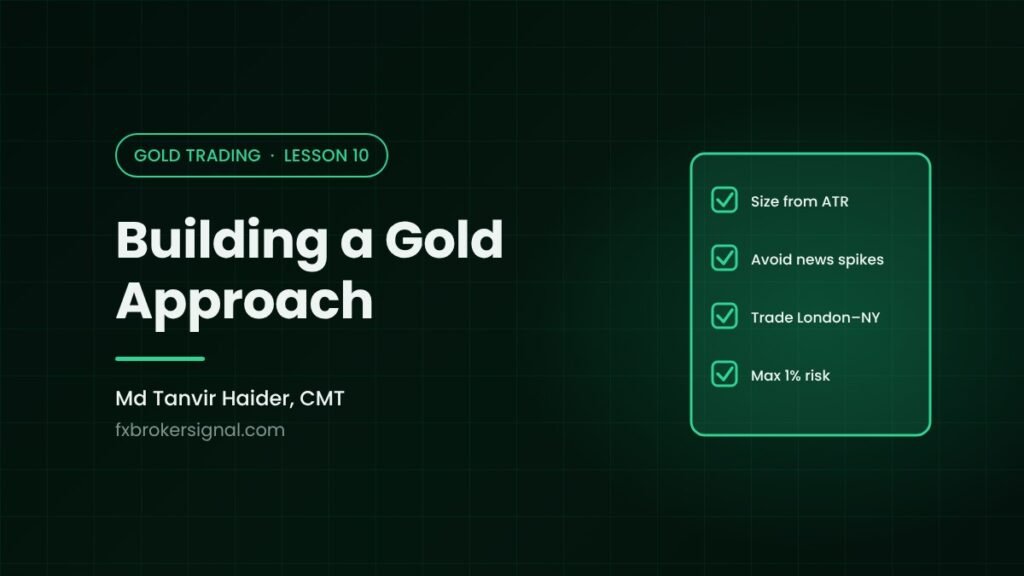
| XAU/USD (gold) | London and the overlap |
| US indices | New York |
Trading an instrument outside its active session generally means wider spreads and less follow-through. Gold in particular develops its most tradeable moves during London and the overlap, which is worth knowing if you follow our gold analysis.
Weekly rhythm
Days of the week have patterns worth knowing.
Monday is often slow. The market is digesting weekend news and establishing the week’s direction. Ranges are frequently narrower.
Tuesday through Thursday carry the most volume and the cleanest movement. Most significant data releases fall here.
Friday is active until roughly 17:00 GMT, then thins as traders close positions before the weekend. Late Friday can produce erratic moves on low volume, and it is generally a poor time to open new positions.
Two calendar periods behave differently: late December, when volume collapses around the holidays, and August, when European trading desks are lightly staffed. Both produce thinner conditions than usual.
Your platform’s server time
One practical detail that confuses many beginners.
Your MT4 or MT5 platform runs on broker server time, not your local time. Most brokers use GMT+2 or GMT+3. This determines when daily candles open and close, which affects any strategy using daily levels.
Find your server time in the Market Watch window, then calculate the offset from your own timezone once and write it down. Trying to convert mentally in the middle of a trading decision is how people end up trading the wrong session entirely.
Building your schedule
Three questions produce a workable trading schedule.
What hours are genuinely available to you? Not theoretically — actually, consistently, without disrupting work or sleep. Trading while exhausted produces poor decisions regardless of how good the setup looks.
Which session do those hours fall in? Convert to GMT and check against the table above.
Does your strategy suit that session? If your available hours are thin-liquidity periods, either change your approach to higher-timeframe swing trading, or accept that your available window does not support active intraday trading.
That last option is not a failure. Recognising that your schedule suits swing trading rather than scalping saves years of frustration.
What to do next
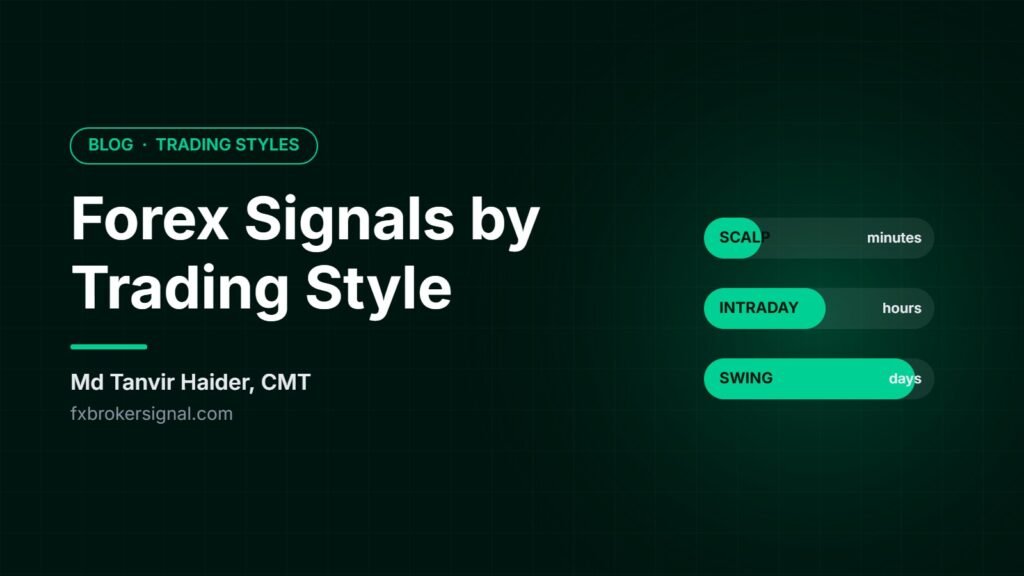
You understand when the market moves and why. Lesson 14, the final lesson, brings this together with your specific trading style — matching scalping, intraday and swing approaches to the right hours, and knowing when to stay out entirely.
Frequently asked questions
What are the forex market hours?
The market runs continuously from Sydney’s open on Sunday evening to New York’s close on Friday evening, passing through four sessions: Sydney (22:00–07:00 GMT), Tokyo (00:00–09:00), London (08:00–17:00) and New York (13:00–22:00).
What is the best time to trade forex?
The London–New York overlap, roughly 13:00 to 17:00 GMT, offers the tightest spreads and deepest liquidity of the day. For most strategies and most pairs, this window provides the best conditions available.
Why are spreads wider at night?
Because fewer institutions are actively quoting prices. Spread directly reflects liquidity, so during the 21:00–23:00 GMT gap between New York closing and Asia opening, the gap between bid and ask widens substantially.
Can I trade forex on weekends?
No. The market closes Friday evening and reopens Sunday evening. Prices can move over the weekend in response to news, sometimes producing a gap at the open — which is the specific risk of holding positions across the weekend.
What time zone does MT4 use?
Broker server time, most commonly GMT+2 or GMT+3, not your local time. This determines when daily candles form. Check the time shown in your Market Watch window and calculate the offset from your own timezone once.
Is it bad to trade during the Asian session?
Not inherently — it suits range-trading strategies and yen pairs. It is poorly suited to breakout strategies, which tend to work better when London provides the volume to sustain a move. Match the strategy to the session rather than avoiding the session outright.