
Interest Rates and Forex — Differentials, Real Rates, Carry
October 30, 2026
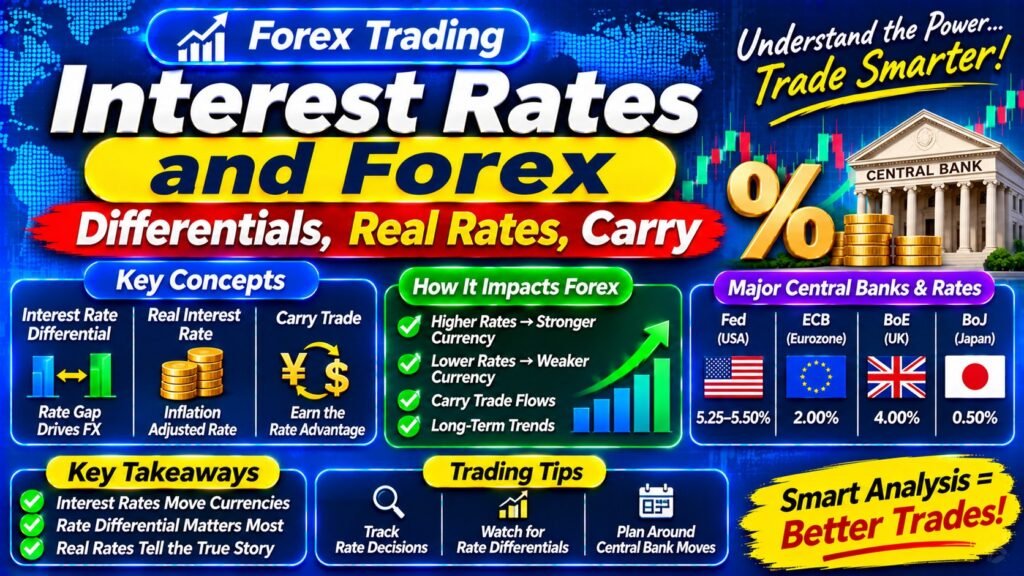
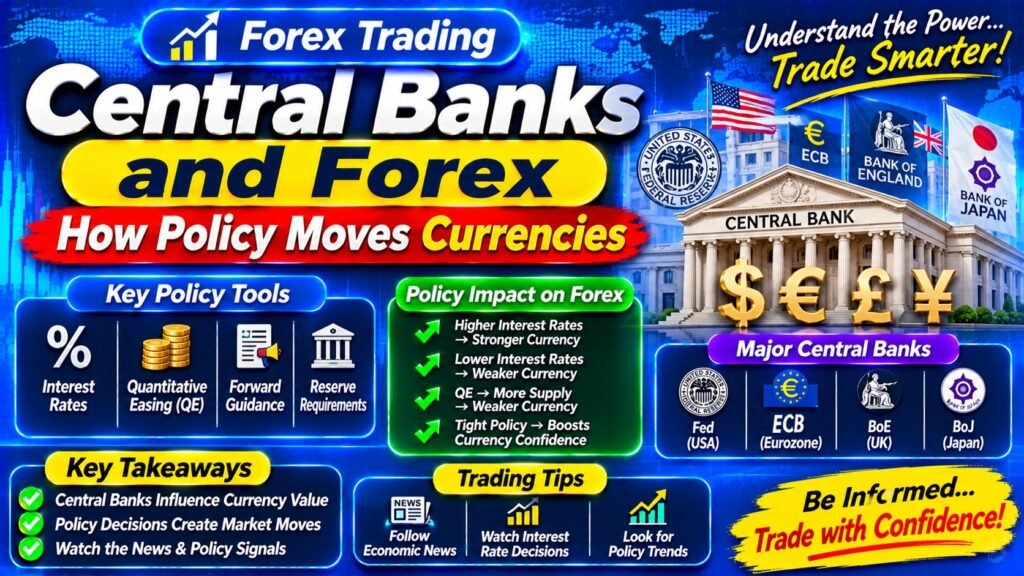
Interest rate differentials explain more sustained currency movement than every other fundamental factor combined. If you understand only one piece of fundamental analysis properly, make it this one — and specifically the difference between the rate that exists today and the rate the market expects tomorrow.
The basic mechanism
Money flows toward higher returns. A currency offering 5% attracts more capital than one offering 0.5%, and acquiring that currency means buying it.
That buying pressure is what strengthens a currency when its central bank tightens.
In forex you are always trading a pair, so what matters is not either rate alone but the differential between them.
US rate: 5.00%
Japan rate: 0.25%
Differential: 4.75% in favour of USD
Holding USD/JPY long earns roughly
that differential annually, before costs.
A widening differential supports the higher-yielding currency. A narrowing one works against it — which is why a currency can weaken even while its own rates rise, if another central bank is raising faster.
Real rates matter more than nominal
The headline rate is nominal. What determines actual return is the rate after inflation.
Country A: 6% rate, 8% inflation
Real rate: −2%
Country B: 3% rate, 1% inflation
Real rate: +2%
Country A offers the higher headline number and the worse real return. Capital preferring B over A is entirely rational despite the nominal comparison appearing to favour A.
This is why inflation data moves currencies so sharply. A higher-than-expected inflation reading does two things simultaneously: it lowers the current real rate, and it raises the probability the central bank tightens in response. The second effect usually dominates.
Expectations, not levels
The point that separates useful fundamental reading from unhelpful reading.
Today’s rates are known to everyone and already reflected in current prices. A trader who buys a currency because its rates are high is buying something the entire market already knew.
Currency movement comes from revisions to expectations.
If markets expect three rate cuts this year and data suggests only one will happen, the currency strengthens — even though rates are still falling. The path changed, and the path is what was priced.
How to apply this practically
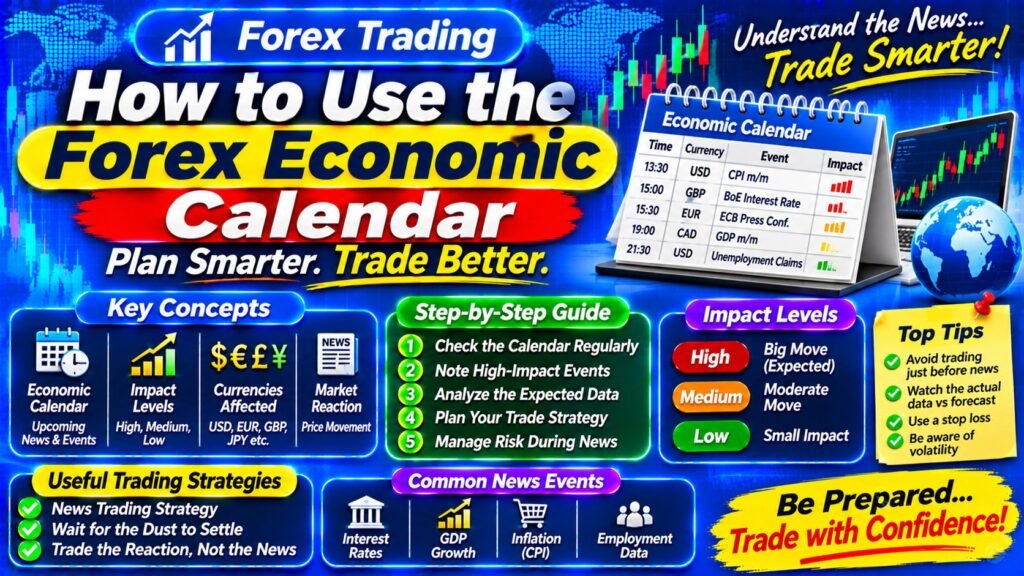
Before reacting to any rate news, ask what was expected. A cut that was fully anticipated is not bearish news. A hold that was expected to be a cut is genuinely hawkish. Financial media and economic calendars publish consensus forecasts precisely because the comparison is what matters.
The carry trade
The most direct expression of rate differentials, and worth understanding even if you never use it.
A carry trade means borrowing in a low-yielding currency and holding a high-yielding one, collecting the differential. Held long enough, the accumulated interest can exceed the trading profit.
In retail forex, this appears as positive swap — the overnight credit covered in the Beginner’s Guide. Holding a position where you are long the higher-yielding currency generates a small daily credit rather than a charge.
The risk that defines it
Carry trades work in calm conditions and unwind violently in stressed ones.
When risk sentiment deteriorates, investors close carry positions to reduce exposure. That means selling the high-yielding currency and buying back the low-yielding one — all at once, across the market.
The resulting moves are fast and large. Years of accumulated carry income can be erased in days.
This is a significant part of why the Japanese yen strengthens during global stress. Yen has long been a funding currency for carry trades, so risk-off periods force widespread buying to close those positions.
The yield curve
Longer-term rates carry information the policy rate does not.
A yield curve plots government bond yields across maturities. Normally longer maturities yield more, compensating for time and uncertainty.
When short-term yields exceed long-term — an inverted curve — it typically indicates markets expect rates to fall, usually because they anticipate economic weakness. Inversions have historically preceded recessions, though the lead time varies considerably and the relationship is not mechanical.
For currency traders, the practical use is as a forward-looking signal. Bond markets often reprice rate expectations before central banks act, so a shifting yield curve can indicate a coming policy change.
This is genuinely useful context for swing and position traders. It is largely irrelevant intraday.
Reading rate expectations
You do not need to forecast rates yourself. Markets publish their own expectations.
Interest rate futures imply the probability of a rate change at each upcoming meeting. Various tools present these as percentages — the probability of a cut at the next meeting, for instance.
Central bank projections, where published, show policymakers’ own expectations. The Fed’s dot plot is the most watched.
Consensus forecasts on economic calendars show what economists expect for upcoming data.
Checking implied probabilities before a rate decision takes a minute and tells you what is already priced. A decision at 90% probability is essentially priced in; one at 55% means genuine uncertainty and a larger reaction either way.
Where rate analysis fails
Risk events override it. During acute stress, capital moves to safety regardless of yield. A high-yielding currency can collapse while its rates stay high.
Timing is unavailable. Knowing a differential favours a currency says nothing about when it will strengthen. Currencies can move contrary to rate logic for months.
Everything is already priced. Any conclusion you reach from public rate data has been reached by institutions with better models. Your edge is not in analysis — it is in execution and risk management.
Political interference. Central bank independence is not universal, and policy that deviates from economic logic is difficult to anticipate.
A limit worth respecting
Fundamental conviction is where position sizing discipline most often breaks down. A trader certain a currency must strengthen holds through drawdown, adds to the position, and moves stops — all because the economics support them. The economics may well be right. The account can still be gone before the market agrees. Being early is indistinguishable from being wrong when leverage is involved.
Practical application
How to use rate analysis without overcomplicating it.
Check the stance for your instruments — tightening, easing or holding. Ten minutes, rarely changes week to week.
Note the differential direction. Which currency in your pair has the more favourable rate trajectory?
Use it as bias, not signal. Prefer setups aligned with the rate picture; do not force trades based on it.
Check swap costs before holding positions for weeks. A negative swap on a wide differential accumulates meaningfully.
Keep sizing unchanged. Fundamental conviction is not a reason to risk more.
What to do next
The next lesson covers inflation — the data that most directly drives rate expectations, and the release that moves currencies most reliably after rate decisions themselves.
Frequently asked questions
How do interest rates affect currency value?
Higher rates attract capital seeking return, and acquiring a currency to hold it means buying it. In forex what matters is the differential between the two currencies in a pair, not either rate alone.
What are real interest rates?
The nominal rate minus inflation — the actual return after purchasing power is accounted for. A 6% rate with 8% inflation is a negative real return, which is why markets often favour lower-nominal, lower-inflation currencies.
What is a carry trade?
Borrowing in a low-yielding currency and holding a high-yielding one to collect the differential. In retail forex this appears as positive swap. Carry trades work in calm conditions and unwind violently during risk-off periods.
Why does the yen strengthen during market stress?
Partly because it has long been a funding currency for carry trades. When risk sentiment deteriorates, investors close those positions, which requires buying back yen across the market simultaneously.
What does an inverted yield curve mean?
Short-term yields exceeding long-term ones, which typically indicates markets expect rates to fall because of anticipated economic weakness. Inversions have historically preceded recessions, though lead times vary considerably.
Can I predict currency moves from interest rates?
You can form a directional bias over weeks and months, but not timing. Rate differentials explain sustained trends, while entry timing requires technical analysis. Currencies can also move contrary to rate logic for extended periods during risk events.