
How to Use the Forex Economic Calendar
October 30, 2026
The economic calendar is the highest-value five minutes in a trader’s routine. It is free, takes almost no time, and prevents an entire category of loss that has nothing to do with analysis quality. Most traders who skip it do so because it seems too simple to matter.
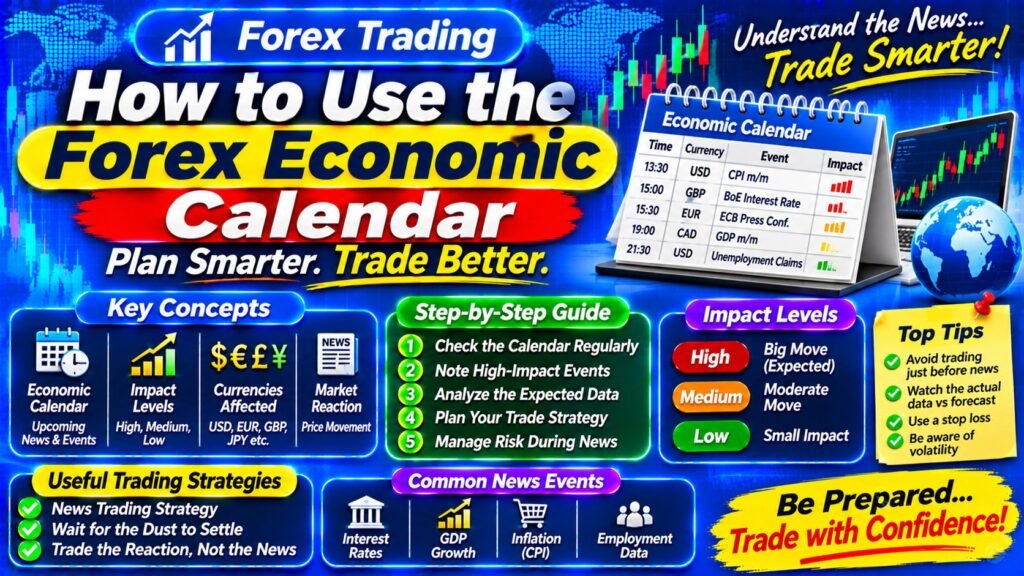
What the calendar shows
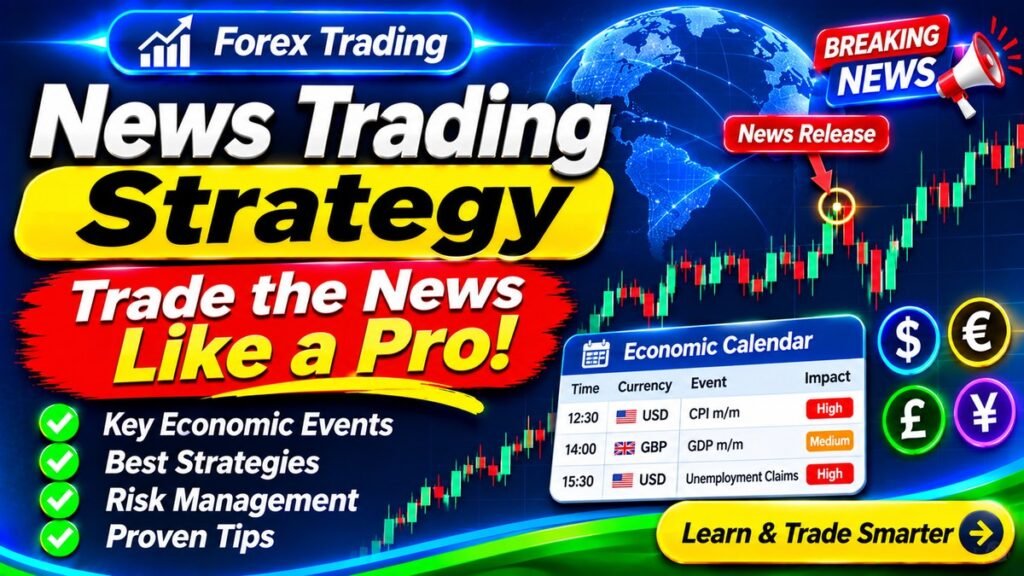
A schedule of upcoming economic releases, with the time, the currency affected, an impact rating, and three numbers.
| Column | Meaning |
|---|---|
| Time | Scheduled release, in your timezone |
| Currency | Which currency is affected |
| Impact | Expected volatility, usually colour-coded |
| Actual | The published figure |
| Forecast | Economists’ consensus expectation |
| Previous | Last period’s figure |
The forecast column is the one beginners overlook and the one that determines market reaction. A figure is not good or bad in isolation — it is a surprise or not, measured against consensus.
Reading the impact ratings
Most calendars use three levels, typically colour-coded or starred.
High impact — rate decisions, CPI, employment reports. These produce significant volatility and require planning around.
Medium impact — retail sales, PMI, GDP. Can move price meaningfully, particularly on a large surprise.
Low impact — minor surveys, secondary data. Generally ignorable.
Two caveats worth knowing.
Ratings are estimates. A medium-impact release can produce a large move if it contradicts the prevailing narrative.
Context shifts importance. During an inflation-focused period, CPI dominates everything. When growth concerns lead, PMI and employment matter more. The same release carries different weight in different regimes.
The five-minute routine
This is what the lesson is really about.
BEFORE EACH SESSION
1. Filter to your currencies and gold
2. Filter to high and medium impact
3. Note any release in your trading window
4. Check the forecast for each
5. Decide: trade around it, or stay flat
Five minutes, once per session. This single habit prevents holding a tight-stopped position through an event that makes your calculated risk meaningless.
For swing traders, the same routine weekly — checking the whole week ahead on Sunday, since positions will be open across several days.
Which currencies to filter for
Set the calendar to show only what affects your instruments.
Trading EUR/USD means watching both euro and dollar releases. Trading GBP/JPY means pound and yen.
Two additions worth making regardless of what you trade:
USD always. Dollar data moves nearly everything, including pairs that do not contain USD, through its effect on global risk sentiment.
USD for gold. XAU/USD responds strongly to US rate expectations. If you trade gold, US CPI and NFP are your releases even though no currency pair is involved.
Time zones — the detail that causes problems
Calendars usually default to a timezone that may not be yours.
Set your calendar to your local time, then be aware of two complications.
Daylight saving shifts release times. US data moves by an hour twice a year relative to GMT. A release you know as 13:30 becomes 12:30, which is enough to catch you holding a position you intended to close.
Your platform runs on server time. As covered in the Beginner’s Guide, MT4 and MT5 use broker server time, commonly GMT+2 or GMT+3. Your calendar and your charts may show different times for the same moment.
Worth calculating the offset once and writing it down rather than converting mentally under pressure.
Using the forecast properly
The comparison that determines reaction.
CPI forecast: 2.9%
CPI actual: 3.2%
→ Hawkish surprise, currency positive
CPI forecast: 3.5%
CPI actual: 3.2%
→ Dovish surprise, currency negative
Identical actual figures, opposite reactions. The number alone tells you nothing.
Also worth checking the previous column for direction. A figure matching forecast but well below the previous reading still indicates a trend, and markets respond to trends as well as surprises.
Revisions
Many releases include revisions to prior periods, and calendars show these as changes to the previous figure.
Revisions occasionally matter more than the new data. A strong current month alongside a large downward revision to the prior two months is not the bullish release it initially appears.
This is a common cause of the reversal pattern described in the employment lesson — algorithms react to the headline, humans read the revision, and price turns.
What to do when a release is scheduled
Four options, and the right one depends on your style.
Stay flat. Close positions in the affected currency before the release. The simplest approach and appropriate for most beginners.
Reduce size. Halve the position, accepting some exposure with a margin for slippage.
Widen the stop. Only viable if position size is reduced correspondingly — otherwise you have increased risk rather than managed it.
Hold unchanged. Only defensible for swing positions with wide stops, where a single release is unlikely to invalidate a multi-week thesis. Even then, a genuine surprise can.
What is not an option is holding a tight-stopped position without thinking about it. That is the specific behaviour the calendar routine prevents.
Why this matters more than it sounds
A stop loss assumes it fills at your level. During a release it may fill considerably worse, which means the 1% you calculated becomes 2% or more. The risk management you carefully applied is quietly bypassed. This is not a rare edge case — it happens on every major release, to everyone who left a position open without adjusting.
Beyond the daily check
Two longer-horizon uses.
Central bank meeting dates. Eight per year per bank, known months ahead. Marking them prevents being surprised by the single highest-impact event type.
Release clustering. Some days carry several high-impact releases. The first Friday of the month, with NFP, is one. Days with a rate decision plus CPI are another. These deserve extra caution or complete avoidance.
What to do next
The next lesson covers risk sentiment — the force that overrides economic data during periods of stress, and why understanding it explains moves that data alone cannot.
Frequently asked questions
What is a forex economic calendar?
A schedule of upcoming economic releases showing the time, affected currency, expected impact, and three numbers — the actual figure once published, the consensus forecast, and the previous period’s reading.
Why does the forecast column matter?
Because markets react to surprises rather than absolute figures. The same inflation reading can be bullish or bearish for a currency depending on whether it exceeded or missed expectations. Reading the actual number alone tells you very little.
Which releases should I watch?
Filter to the currencies in your instruments, plus USD regardless — dollar data moves nearly everything through global risk sentiment. If you trade gold, US CPI and NFP are your releases even though no currency pair is involved.
How often should I check the calendar?
Before each trading session for intraday traders, roughly five minutes. Weekly for swing traders, checking the full week ahead since positions stay open across days.
Why do release times sometimes change?
Daylight saving shifts US and European release times by an hour relative to GMT twice a year. Your platform also runs on broker server time, which may differ from your calendar’s timezone. Calculate the offset once and write it down.
What should I do with open positions before news?
Close them, reduce size, or widen the stop with a correspondingly smaller position. What you should not do is leave a tight-stopped position unchanged — slippage during a release can make your calculated risk substantially inaccurate.