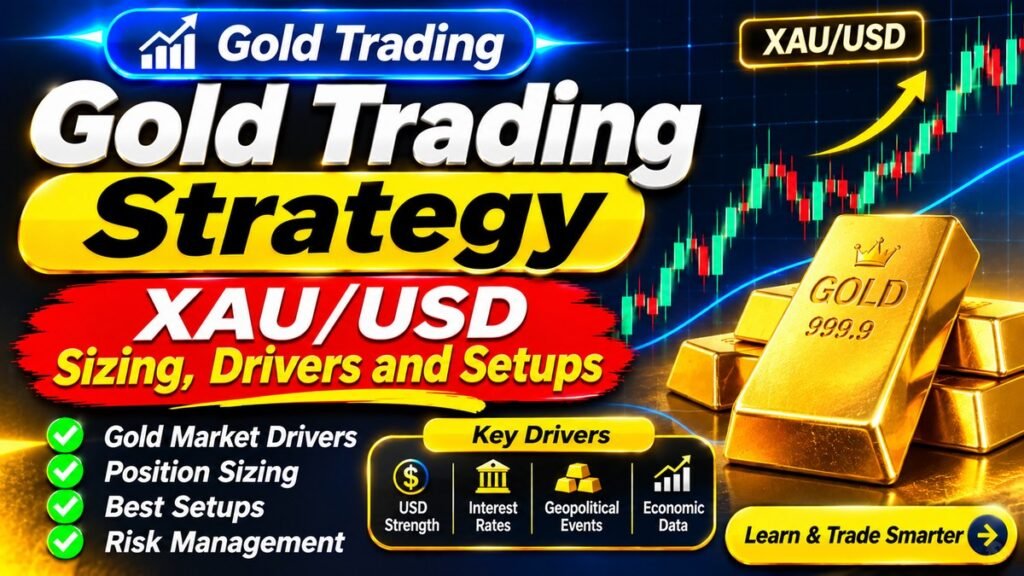

What Drives the Gold Price — XAU/USD Fundamentals
October 30, 2026

Gold is the instrument most traders think they understand fundamentally and most often get wrong. It is described as an inflation hedge, a crisis asset and a dollar hedge — all partly true, none reliable, and each capable of pointing the opposite way from the others in the same week.
Start with what gold is not
Gold produces no income. It pays no interest, no dividend, and generates no earnings. Storage costs money rather than making it.
This single fact explains more about gold’s price behaviour than every narrative about safe havens and monetary debasement combined.
Because gold pays nothing, its attractiveness depends entirely on what else is available. When other assets pay well, gold’s zero yield is a real cost. When they pay little, that cost disappears.
The primary driver: real interest rates
The relationship that explains most sustained gold moves.
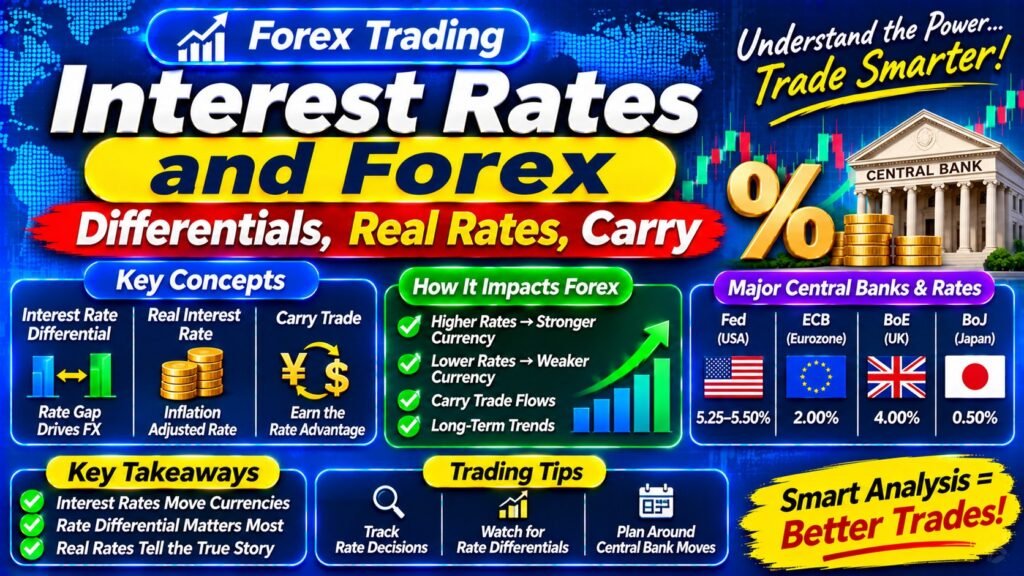
A real interest rate is the nominal rate minus inflation — the actual return after purchasing power is accounted for.
Nominal rate 5%, inflation 2%
→ Real rate +3%
→ Holding bonds beats holding gold
→ Gold pressured
Nominal rate 2%, inflation 4%
→ Real rate −2%
→ Bonds lose purchasing power
→ Gold’s zero yield is competitive
→ Gold supported
When real rates fall, gold tends to rise. When they rise, gold tends to fall. This relationship holds more consistently than any other gold driver, though it is a tendency rather than a mechanical rule and periods of divergence occur.
Why this resolves the inflation confusion
High inflation is not automatically good for gold. If inflation rises and central banks respond aggressively enough that real rates increase, gold can fall despite high inflation. Gold benefits when inflation rises faster than central banks respond — when real rates fall. This is why “gold is an inflation hedge” produces so many disappointed traders.
The dollar relationship
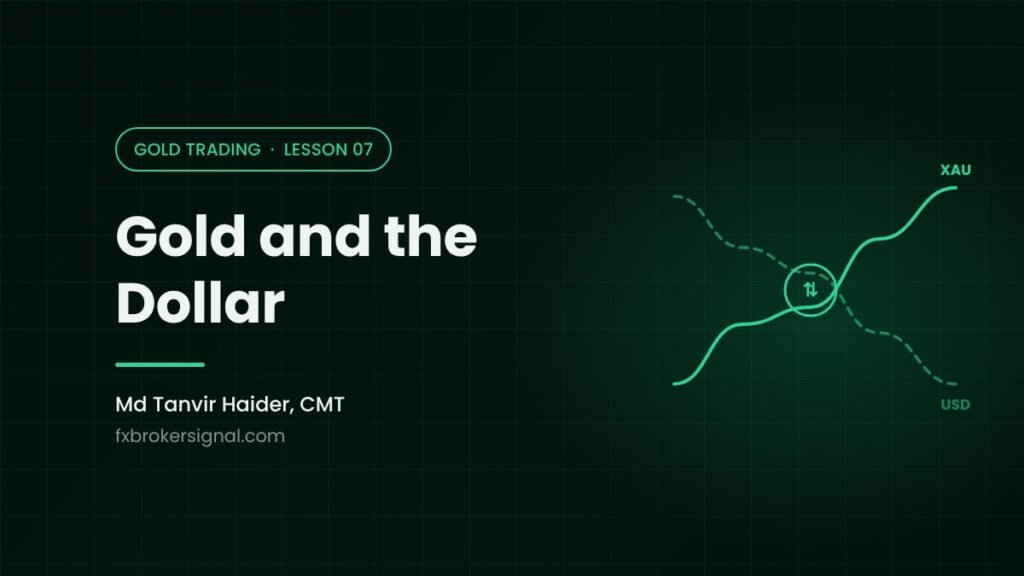
Gold is priced in dollars, which produces a mechanical inverse relationship.
When the dollar strengthens, gold costs more in every other currency, which dampens demand. When the dollar weakens, gold becomes cheaper globally.
Two qualifications matter.
It is not a fixed rule. Gold and the dollar can rise together during acute stress, when both are being bought as safe havens simultaneously. Traders treating the inverse relationship as reliable get caught by exactly these periods.
The driver is often shared. Both gold and the dollar respond to US rate expectations. What looks like gold reacting to the dollar is frequently both reacting to the same Fed news.
The Dollar Index is worth watching alongside gold, with the understanding that it is correlated context rather than a leading indicator.
Safe-haven demand
Real but inconsistent, and the inconsistency is what catches people out.
Gold rises reliably during geopolitical stress — conflict, military escalation, major political instability. It also benefits from monetary system concerns, such as fears about currency debasement or banking stability.
Gold behaves less predictably during pure liquidity crises. When institutions face margin calls and need cash urgently, they sell whatever is liquid — including gold. Gold has fallen during the initial phase of several major crises for exactly this reason, before recovering strongly once liquidity stabilised.
The practical reading: gold is a hedge against monetary and geopolitical stress, not against every form of market decline.
Central bank buying
A structural driver that operates on a longer horizon than most traders consider.
Central banks hold gold as part of their foreign reserves. When they collectively buy or sell, the volumes are large enough to matter.
Sustained central bank accumulation provides a demand floor beneath the market that is relatively insensitive to price — these are reserve managers following policy mandates rather than traders seeking entries.
This is not tradeable on any short timeframe. It is context explaining why gold may find support at levels that pure rate analysis would not predict.
Physical supply and demand
Less important than most fundamental frameworks suggest, and worth knowing why.
Mine supply changes slowly. New mines take years to develop, so production is close to fixed over trading horizons.
Jewellery demand, concentrated in India and China, is seasonal and price-sensitive — it rises when prices fall, which dampens moves rather than driving them.
Investment demand through ETFs and bars is the volatile component and the one that actually moves price. This is really the real-rate and safe-haven story expressed through a different channel.
Unlike oil or agricultural commodities, gold’s above-ground stock is enormous relative to annual production. Nearly all gold ever mined still exists. Supply changes therefore matter far less than shifts in the willingness to hold existing stock.
What actually moves gold day to day
A practical hierarchy.
| Driver | Horizon | Reliability |
|---|---|---|
| US rate expectations | Days to months | High |
| Real interest rates | Months | High |
| Dollar direction | Days | Moderate |
| Geopolitical events | Hours to weeks | Moderate |
| Central bank buying | Quarters | Structural |
| Physical demand | Seasonal | Low |
The top two dominate. A trader who follows US rate expectations and nothing else will understand most of gold’s movement.
The releases that matter for gold
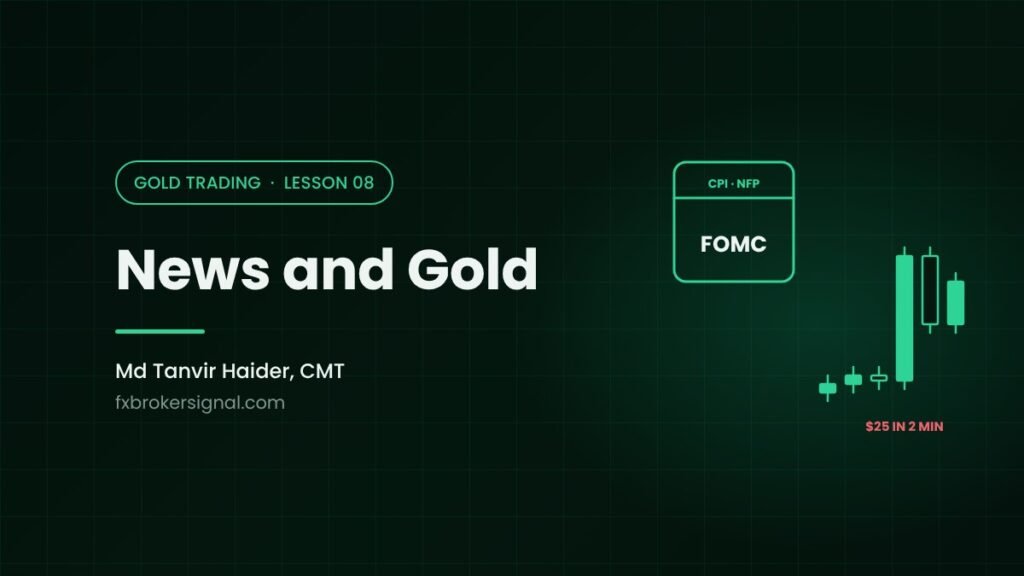
Because gold responds to US rate expectations, the US calendar is the gold calendar.
Fed rate decisions — the highest impact event for gold, full stop.
US CPI — shifts rate expectations directly, and gold reacts sharply.
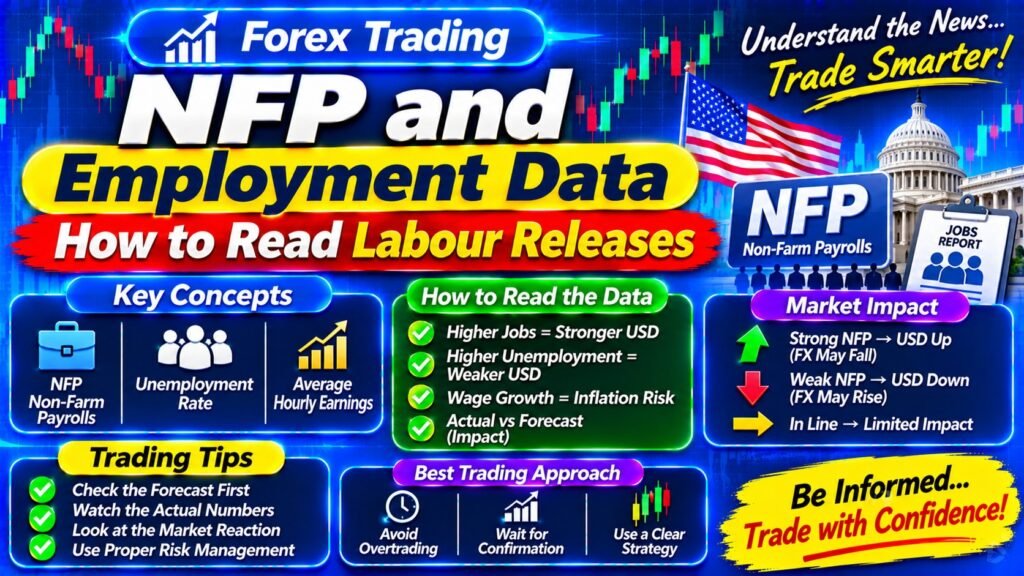
NFP — moves gold as much as it moves dollar pairs, sometimes more.
Fed speeches — governors’ comments on the rate path can move gold without any data release.
If you trade XAU/USD, you need the US economic calendar even though you are not trading a currency pair. This surprises traders who came to gold expecting it to be independent of forex fundamentals.
Why gold behaves differently as an instrument
Briefly, because it affects how fundamentals translate into trading.
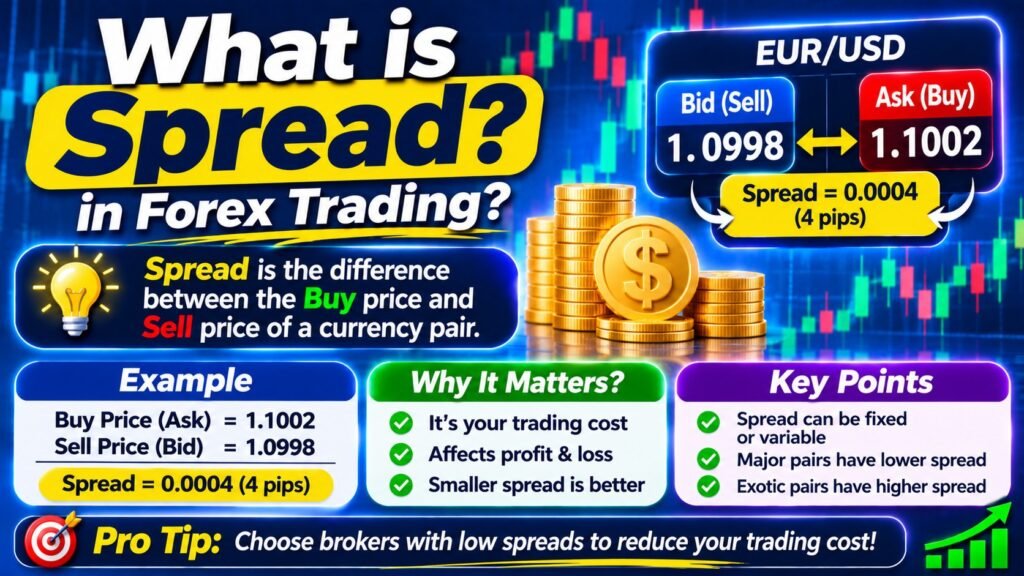
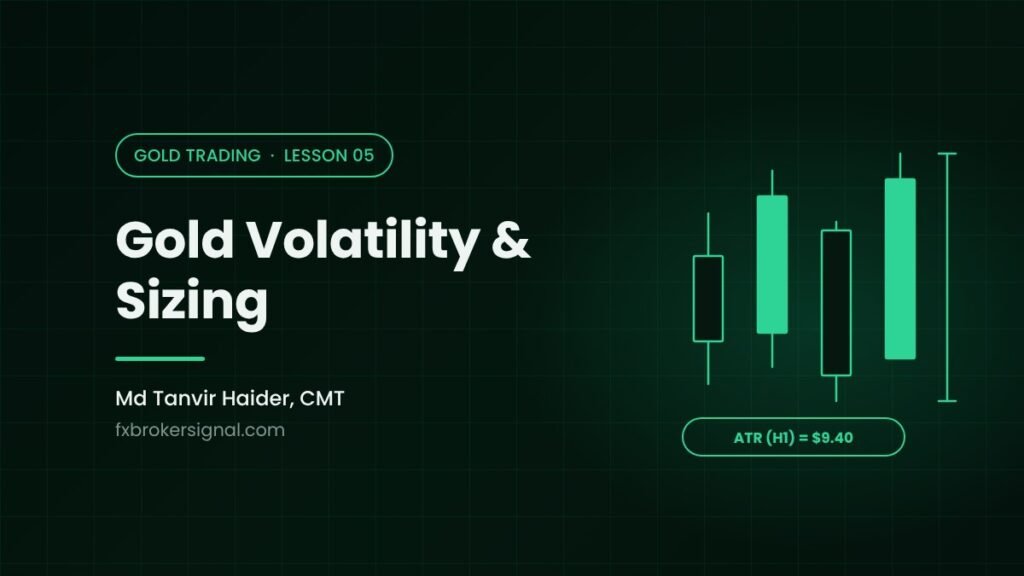
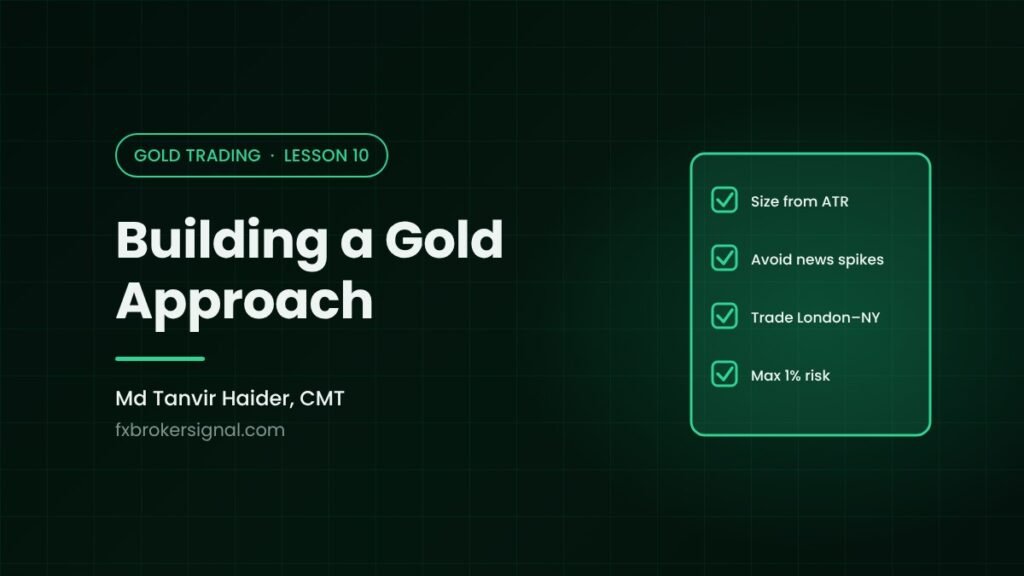
Gold moves in larger ranges than major currency pairs, has wider spreads, and is more prone to sharp reversals. A fundamental view that would justify a normal position in EUR/USD justifies a considerably smaller one in gold.
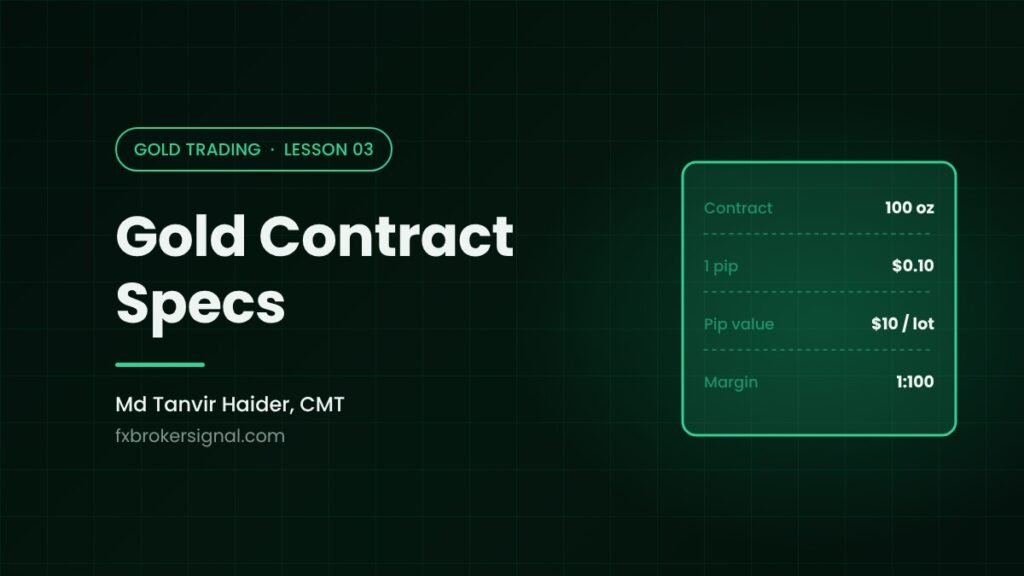
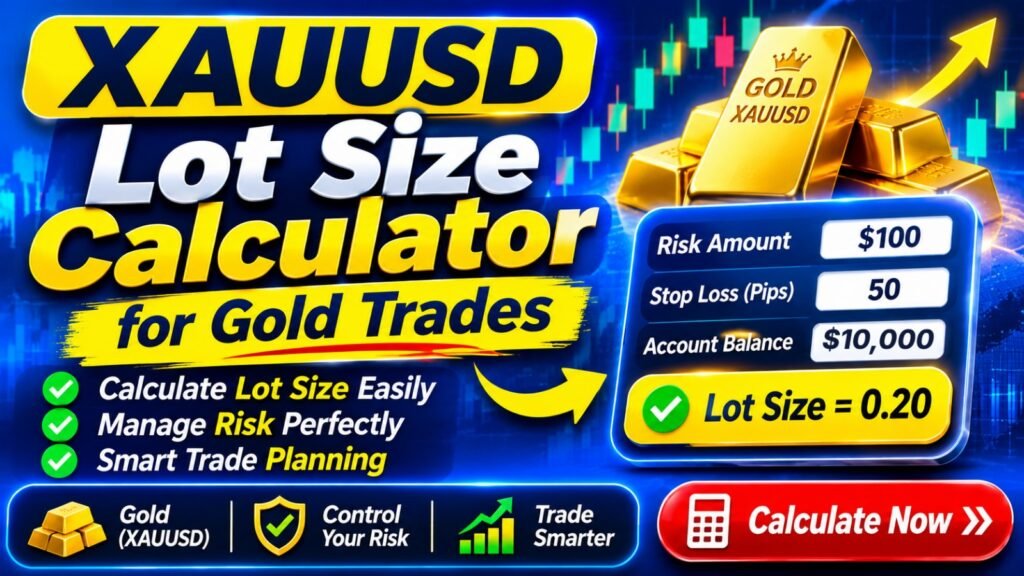
The volatility is not a reason to avoid it. It is a reason to size positions from the actual stop distance rather than habit — the Lot Size calculator handles the arithmetic, and the Pip Value calculator confirms what a gold pip is worth at your lot size, which differs from currency pairs.
Common fundamental mistakes with gold
Buying on high inflation alone. Without checking what real rates are doing, this is as likely to be wrong as right.
Assuming the dollar inverse always holds. Both can rise together during stress.
Treating every crisis as bullish. Liquidity crises can push gold down initially.
Ignoring the Fed calendar. Gold traders who do not watch US rate events are trading blind.
Holding through drawdown on a fundamental view. Gold’s volatility punishes this faster than currencies do.
What to do next
The final lesson in this section covers combining fundamental and technical analysis — how bias from one and timing from the other fit together into a workable process.
For gold specifically, the Gold Trading section covers the instrument in depth, including session behaviour, volatility handling and the practical mechanics of trading XAU/USD.
Frequently asked questions
What drives the gold price?
Primarily real interest rates — the nominal rate minus inflation. Because gold pays no yield, it competes poorly when real returns elsewhere are high and competes well when they are low or negative. US rate expectations are the most immediate driver day to day.
Is gold really an inflation hedge?
Over very long horizons, reasonably. Over trading timeframes, unreliably. Gold benefits when inflation rises faster than central banks respond, pushing real rates down. If policymakers tighten aggressively enough that real rates rise, gold can fall despite high inflation.
Why does gold fall when the dollar rises?
Because gold is priced in dollars, so dollar strength makes it more expensive in every other currency and dampens demand. The relationship is not fixed — both can rise together during acute stress when each is bought as a safe haven.
Does gold always rise during crises?
No. Gold rises reliably during geopolitical and monetary stress, but can fall during pure liquidity crises when institutions sell whatever is liquid to raise cash. It has declined in the opening phase of several major crises before recovering.
Which economic releases move gold?
US releases, because gold responds to US rate expectations. Fed decisions matter most, followed by US CPI and Non-Farm Payrolls. Fed speeches can move gold without any data release at all.
Does physical gold supply affect the price?
Less than most frameworks suggest. Nearly all gold ever mined still exists, so the above-ground stock dwarfs annual production. Shifts in willingness to hold existing stock matter far more than changes in mine supply.