
Combining Fundamental and Technical Analysis in Forex
October 30, 2026

The argument over whether technical or fundamental analysis is better has consumed more trader attention than it deserves. They answer different questions, and the practical integration is simple enough to describe in one sentence: fundamentals decide which direction, technicals decide where and when, and risk management stays the same regardless.
What each actually provides
| Question | Answered by |
|---|---|
| Which direction over weeks? | Fundamentals |
| At what price should I enter? | Technicals |
| Where is my idea wrong? | Technicals |
| Why might this move persist? | Fundamentals |
| When should I be flat? | Both — calendar plus structure |
| How large a position? | Neither — risk rules |
The last row matters most and is where the debate becomes irrelevant. Position size comes from account balance, stop distance and a fixed risk percentage. Neither analytical approach has anything to say about it.
The workflow
A process that takes about thirty minutes a week plus a few minutes daily.
Weekly — establish bias
For each currency you trade, note the central bank stance: tightening, easing, or holding. Note the direction of the recent rate-relevant data — inflation rising or falling, employment strengthening or weakening.
For a pair, compare the two. A currency whose central bank is tightening against one that is easing has a fundamental tailwind.
For gold, note where US rate expectations are heading.
This produces a simple statement per instrument: bullish bias, bearish bias, or no clear bias. It changes slowly.
Daily — check the calendar and risk environment
Five minutes. Scheduled releases for your instruments, and a glance at equities and the VIX for the risk backdrop.
Per trade — technical execution
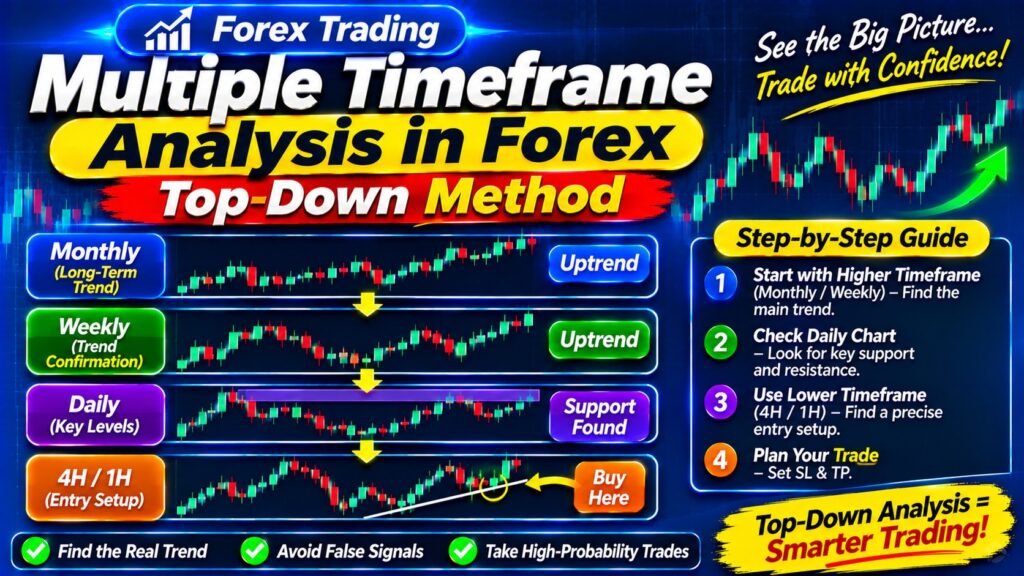
Now the charts do their work, as covered in the Technical Analysis section: higher timeframe trend, marked levels, wait for price to arrive, trigger, stop beyond structure, size from the stop distance.
Fundamental: Bank A tightening,
Bank B holding
→ Bullish bias on A/B
Technical: Daily uptrend confirmed
Support zone marked
Price pulling back to it
Trigger: Rejection candle at the zone
Stop: Below the swing low
Size: 1% risk from stop distance
Calendar: No major release in window
What alignment does and does not mean
When fundamentals and technicals point the same way, the setup is stronger in one specific sense: two independent reasons support the same direction, rather than one.
What it does not mean is that the trade will work, or that it justifies a larger position.
The failure this produces
Conviction is where risk discipline breaks. A trader who is fundamentally certain and technically confirmed feels justified in risking three percent instead of one. That trade fails at roughly the same rate as any other — the confidence was in the analysis, not in the outcome. In twelve years I have never seen a reliable relationship between how certain a trade felt and how it turned out. Fixed sizing exists precisely because the feeling is not informative.
What to do when they conflict
This happens frequently and is not a problem to solve so much as a condition to recognise.
Fundamentals bullish, technicals bearish. The most common resolution: wait. The technical downtrend is likely a correction within a fundamentally supported move. Entering when the technical picture turns gives you both.
Fundamentals bearish, technicals bullish. Same logic inverted. Waiting costs a missed move occasionally; entering against the technical picture costs drawdown regularly.
Neither clear. Trade nothing in that instrument. Not every market offers a setup at all times, and forcing one is where accounts erode.
The principle: technicals govern entry timing even when fundamentals are compelling. A correct fundamental view entered at a poor technical location still produces a losing trade.
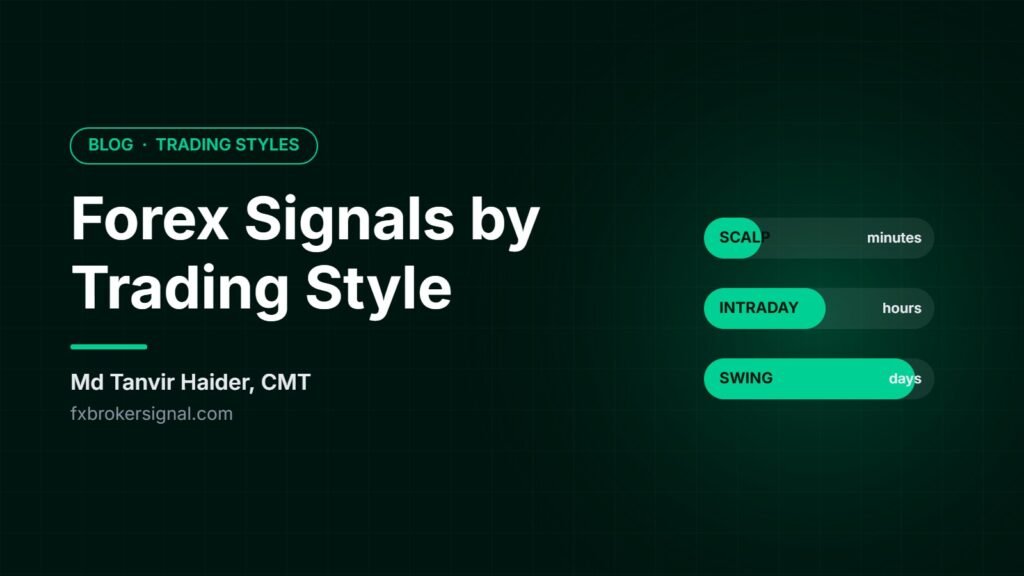
Timeframe determines the balance
How much fundamentals matter depends entirely on holding period.
| Style | Fundamentals | Technicals |
|---|---|---|
| Scalping | Calendar only | Nearly everything |
| Intraday | Calendar plus risk tone | Primary |
| Swing | Meaningful bias | Entry and exit |
| Position | Primary | Entry timing |
A scalper does not need to know the rate differential. They do need to know when NFP is scheduled.
A position trader holding for months has the opposite emphasis — the rate path is the thesis, and the chart determines a reasonable entry within it.
Most retail traders operate somewhere in the intraday-to-swing range, where the balance is roughly: fundamentals for bias and avoidance, technicals for everything else.
Where signal services fit
Worth addressing directly, since many readers use them.
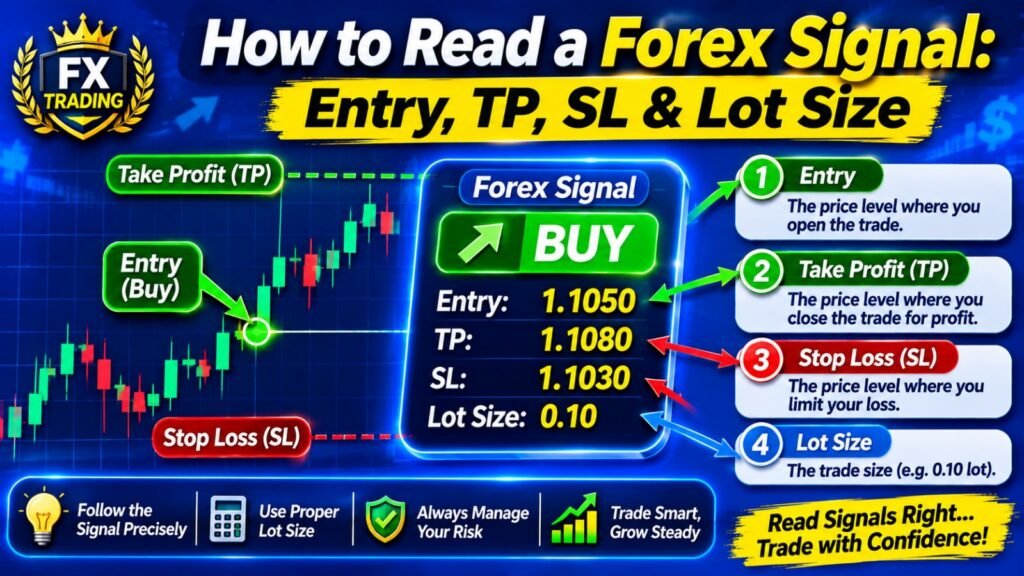
A signal is someone else’s completed analysis — typically technical, sometimes with fundamental context. It arrives as an entry, a stop and a target.
What it cannot include is your account size, your risk tolerance, or how many correlated positions you already hold. Those are the variables that determine your outcome, and no provider — including us — has access to them.
So the useful way to treat a signal is as a trade idea to evaluate rather than an instruction to execute. Does it align with your fundamental bias? Does the stop distance produce a position size you are comfortable with? Are you already exposed to that currency elsewhere?
Traders who apply this filter use signals well. Traders who copy blindly are outsourcing the analysis and keeping the risk, which is the wrong half.
A realistic weekly routine
SUNDAY (20 min)
Central bank stance per currency
Week’s high-impact calendar events
Mark levels on daily charts
Note bias per instrument
EACH SESSION (5 min)
Calendar check for the window
Equities and VIX glance
Review open positions
PER TRADE
Bias aligned?
Technical setup at a level?
Stop from structure
Size from stop distance
No release in window
Roughly forty-five minutes a week plus a few minutes per session. Anything substantially more than this tends to produce overtrading rather than better decisions.
Closing the section
You have covered what drives currencies fundamentally: central banks, rates, inflation, employment, growth, the calendar, risk sentiment and gold.
The consistent thread: nearly everything transmits through rate expectations. Data matters because it shapes what central banks will do, and central banks matter because rates determine where capital flows.
The second thread, which runs through this entire Academy: analysis of either kind determines a smaller share of your results than you would expect. Position sizing, consistent risk per trade, and the discipline to follow your own rules under pressure determine more. A trader with mediocre analysis and excellent risk control outperforms the reverse, reliably.
What to do next
The Academy continues with Gold Trading for XAU/USD specifically, Risk Management for the sizing and exposure rules referenced throughout, and Trading Psychology for the execution problems that analysis cannot address.
If you are choosing one, choose Risk Management. It is the section that changes outcomes most.
Frequently asked questions
Should I use technical or fundamental analysis?
Both, for different purposes. Fundamentals give directional bias over weeks; technicals determine entry price and where the idea is invalidated. Neither determines position size, which comes from risk rules and matters more than either.
What should I do when fundamentals and technicals conflict?
Wait. A technical move against a fundamentally supported direction is usually a correction, and entering once the technical picture turns gives you both. A correct fundamental view entered at a poor technical location still loses money.
Does a stronger setup justify a bigger position?
No. Trades that feel certain fail at roughly the same rate as others — the confidence sits in the analysis, not the outcome. Fixed position sizing exists precisely because conviction is not predictive.
How much fundamental analysis do swing traders need?
Enough to know each central bank’s stance and the direction of recent rate-relevant data, plus a weekly calendar check. Roughly twenty minutes on a Sunday. Deeper analysis produces diminishing returns below monthly holding periods.
Do day traders need fundamentals at all?
Mainly the calendar, to know when not to have a position open. Intraday price action does not respond to rate differentials, but it responds violently during releases.
How should I use trading signals alongside my own analysis?
As trade ideas to evaluate rather than instructions to execute. A signal cannot know your account size, risk tolerance or existing correlated exposure — and those variables determine your outcome more than the entry does.