
Common Gold Trading Mistakes and How to Avoid Them
October 30, 2026
Gold accounts are rarely lost through one catastrophic decision. They are lost through a handful of specific errors repeated until the balance is gone, and the same errors appear in almost every account I have looked at over twelve years. None of them are subtle, and every one is preventable in advance.
1. Using currency-pair position sizes
The most common and most expensive.
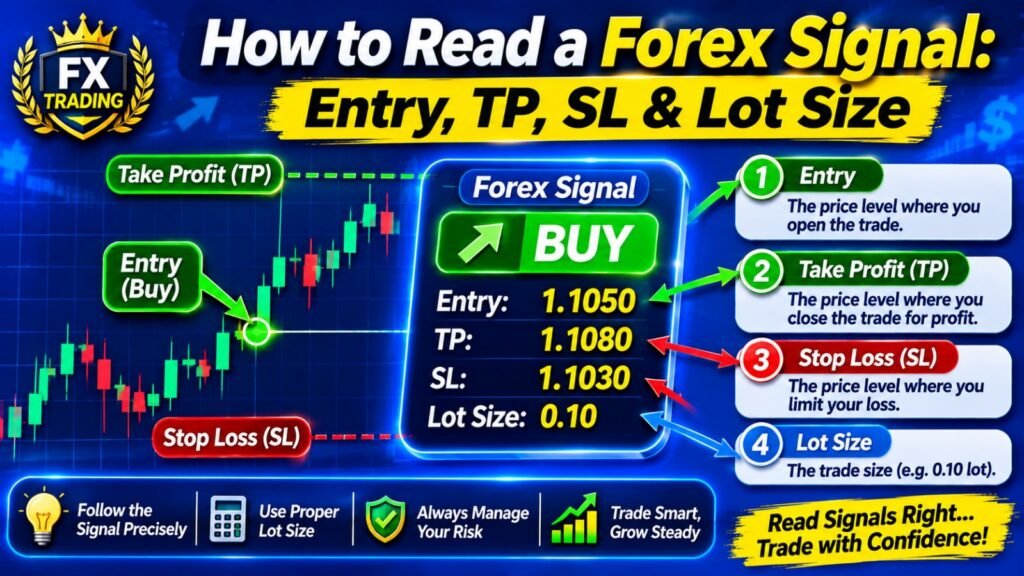
A trader accustomed to 0.10 lots on EUR/USD opens 0.10 lots on gold. On a major pair that is roughly $1 per pip. On gold, depending on the broker’s convention, it can be ten times that — and the instrument moves three to five times further.
The effective risk is not slightly higher. It can be fifteen to thirty times higher.
The fix: calculate position size from stop distance every time, in dollars of price movement rather than pips. The Lot Size calculator makes it a ten-second task.
2. Stops that are too tight
The second most common, and it produces losses that feel undeserved.
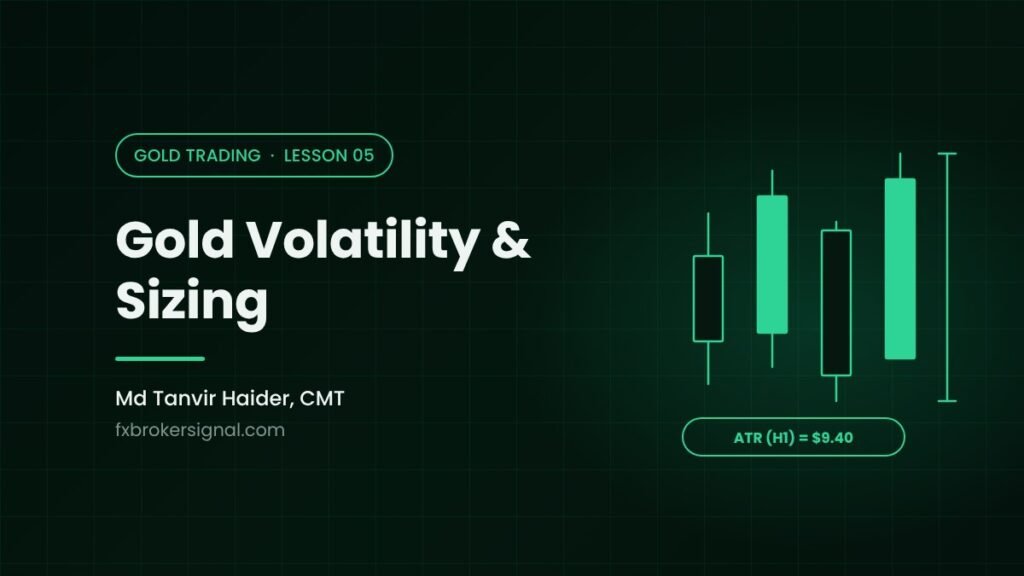
A 30-pip stop that gives EUR/USD room to breathe is inside gold’s routine noise. The trade is stopped out, price reverses and reaches the target, and the trader concludes their analysis was wrong when the analysis was fine.
After several of these, the usual response is to stop using stops — which converts frequent small losses into occasional catastrophic ones.
The fix: stops from structure, confirmed against ATR, with position size reduced to compensate. A wider stop with a smaller position is the same risk, not more.
3. Not checking the pip convention
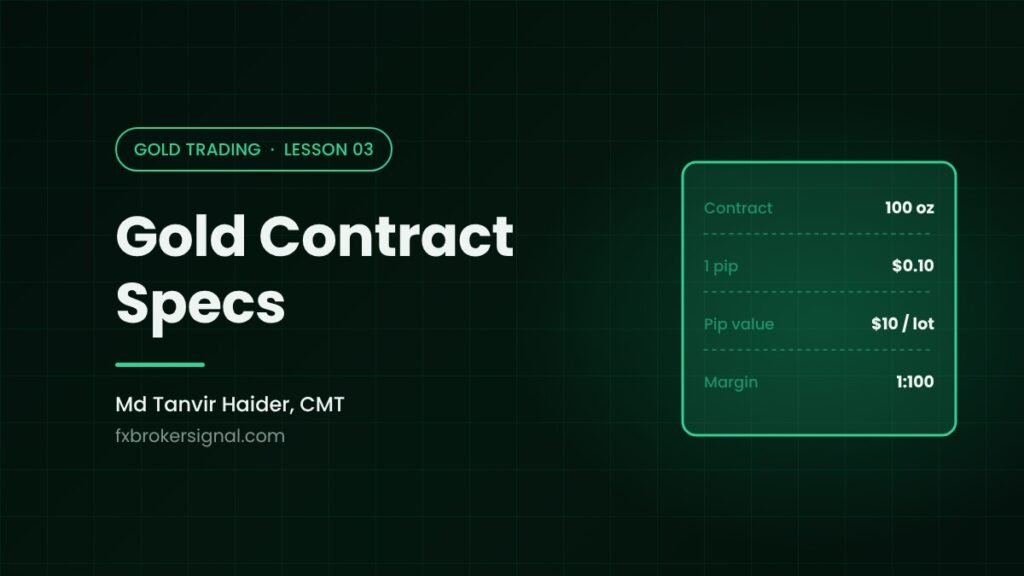
Covered in the contract specs lesson and worth repeating because it is silent.
Nothing on the platform warns you that your broker defines a gold pip as $0.10 rather than $0.01. Every calculation you make is simply wrong by a factor of ten, and you discover it through the account balance.
The fix: the five-minute check, once, per broker. Open a micro position, observe what a known price move produces, write it down.
4. Treating the dollar as a signal
Shorting gold because the Dollar Index turned up, without reference to gold’s own structure.
The relationship is correlation rather than causation, and it breaks during exactly the periods when the largest moves occur — acute risk-off, when both rise together.
The fix: use the dollar as context and let gold’s own levels determine entries and stops.
5. Trading through news without adjusting
Holding a normally-sized gold position through CPI or a Fed decision.
The position may survive. But the stop that was placed to limit loss to 1% can fill several dollars away, and the calculated risk becomes a number the trader never agreed to.
The fix: daily calendar check filtered to high-impact USD events. Flat or substantially reduced before the big three.
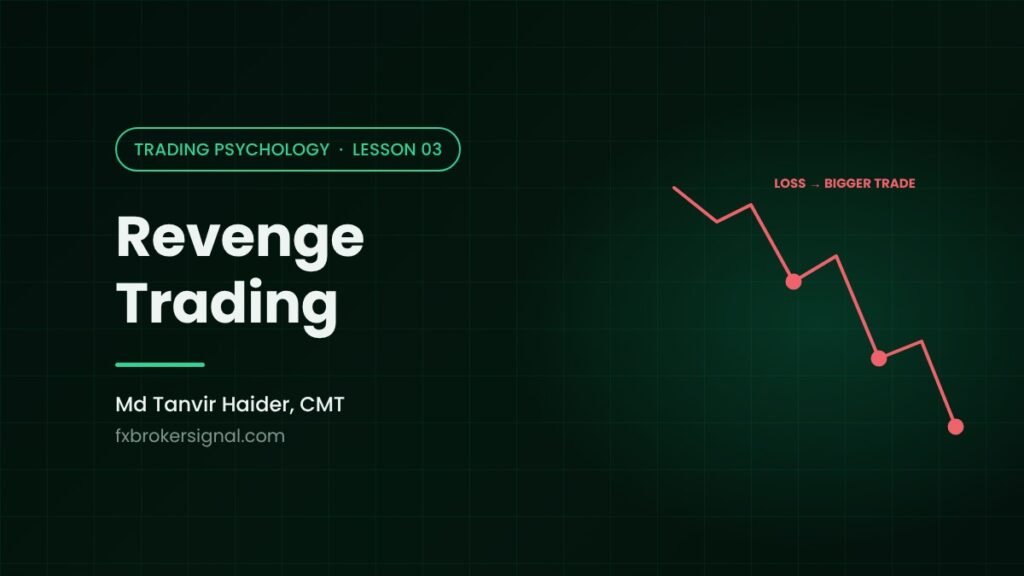
6. Revenge trading after a gold loss
Gold losses are larger in absolute terms, which makes the emotional response stronger.
The sequence is recognisable: a stop is hit, the trader immediately re-enters at a worse price with a larger position to recover the loss, and the second loss exceeds the first.
This is a psychology problem rather than a gold problem, but gold’s volatility accelerates it — the recovery attempt fails faster and larger than it would on a currency pair.
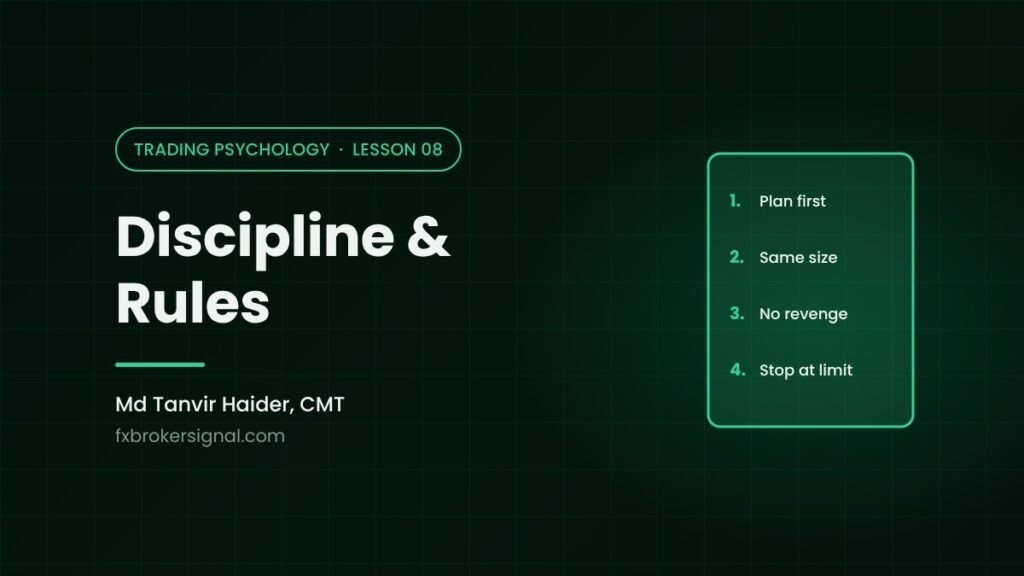
The fix: a daily loss limit, decided in advance and enforced by closing the platform. Two losses or a fixed percentage — the number matters less than having one.
7. Scaling into a losing position
Adding to a losing gold trade because the fundamental view is unchanged.
The logic feels sound: if gold was attractive at 2400, it is more attractive at 2370. The problem is that averaging down increases position size precisely as the position moves against you, which is the opposite of what risk management requires.
On gold this is particularly dangerous because the moves are large. A position averaged down twice during a $60 decline can be several times the intended risk.
The fix: the position is sized once, at entry. If the stop is hit, the idea was wrong for now. Re-entering later with a fresh, properly sized position is a different trade and a legitimate one.
The pattern underneath most of these
Six of the seven errors above are sizing errors or responses to sizing errors. The stop was too tight because the position was too large; the revenge trade happened because the loss was too big; the averaging down was an attempt to avoid admitting the original size was wrong. Fixing position sizing first resolves most of the rest, which is why the Risk Management section matters more than any strategy content.
8. Overtrading gold’s movement
Gold moves constantly, which creates the impression that opportunity is constant.
A trader watching gold at 03:00 GMT sees price moving and takes a trade. The Asian session produces movement without direction, wider spreads, and a low rate of follow-through.
The fix: choose a session window and trade only within it. Movement is not opportunity.
9. Ignoring swap on held positions
Gold swap is frequently negative in both directions. A swing trader holding gold for three weeks pays for every night, including the triple-charge day.
On a small account this can consume a meaningful share of the profit on a winning trade.
The fix: check swap rates in contract specifications before entering a position you intend to hold for more than a few days, and include the cost in your expected outcome.
10. Holding over weekends without reducing
Gold gaps more often than major currency pairs because geopolitical developments occur when markets are closed.
A gap through your stop means you exit at the opening price, not your level. The loss can be substantially larger than planned.
The fix: either close gold positions on Friday, or reduce size to account for gap risk. A position sized for normal conditions is not sized for a weekend gap.
A summary table
| Mistake | Fix |
|---|---|
| Currency-pair sizing | Calculate from stop distance |
| Stops too tight | Structure plus ATR check |
| Wrong pip convention | Five-minute broker check |
| Dollar as signal | Use as context only |
| Trading through news | Daily USD calendar check |
| Revenge trading | Daily loss limit |
| Averaging down | Size once, at entry |
| Overtrading | One session window |
| Ignoring swap | Check before multi-day holds |
| Weekend exposure | Close or reduce Friday |
What to do next
The final lesson in this section brings these together into a workable approach to trading gold — the routine, the rules, and an honest assessment of what to expect.
Frequently asked questions
Why do so many traders lose money on gold?
Mostly through position sizing. A lot size appropriate for a currency pair can represent fifteen to thirty times the effective risk on gold, once the different pip value and larger range are accounted for.
Why do my gold stops keep getting hit?
Usually because they are sized with currency habits. A 30-pip stop that gives EUR/USD room is inside gold’s routine noise. The answer is a wider stop with a correspondingly smaller position, not abandoning stops.
Is it bad to average down on gold?
Yes, and more so than on currencies. Averaging down increases position size as the trade moves against you, and gold’s large moves mean a position averaged down twice can be several times the intended risk.
Should I close gold positions before the weekend?
Close or reduce. Gold gaps more often than major currency pairs because geopolitical developments occur when markets are closed, and a gap through your stop means exiting at the opening price rather than your level.
Does gold swap really matter?
For multi-day holds, yes. Gold swap is frequently negative in both directions, so you pay every night including a triple-charge day. On a small account this can consume a meaningful share of a winning trade’s profit.
What is the single most important fix?
Position sizing. Most of the other common errors are either sizing errors or reactions to them — stops set too tight because the position was too large, revenge trades after outsized losses, averaging down to avoid admitting the size was wrong.