
Building a Gold Trading Approach — Rules That Work
October 30, 2026
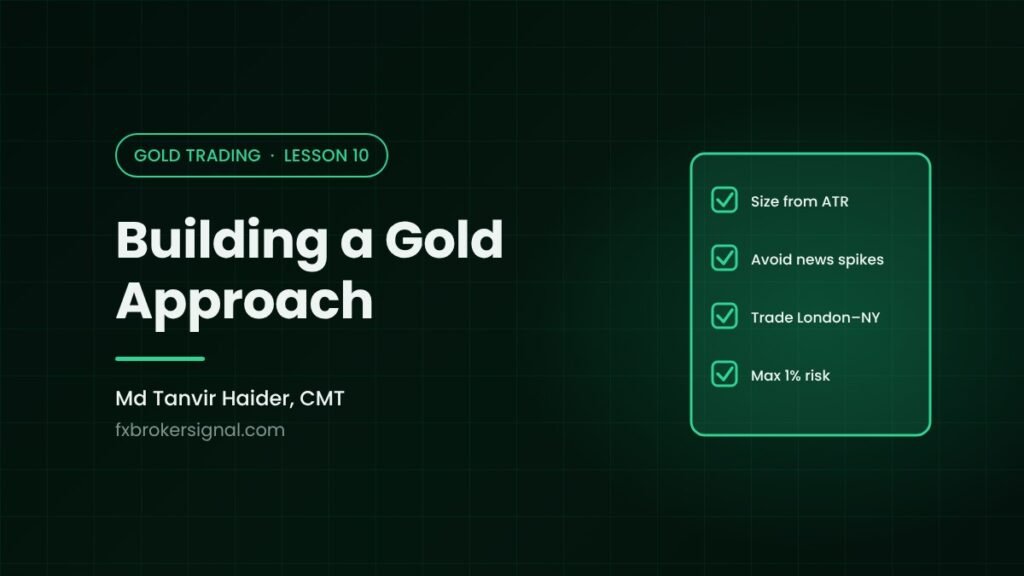
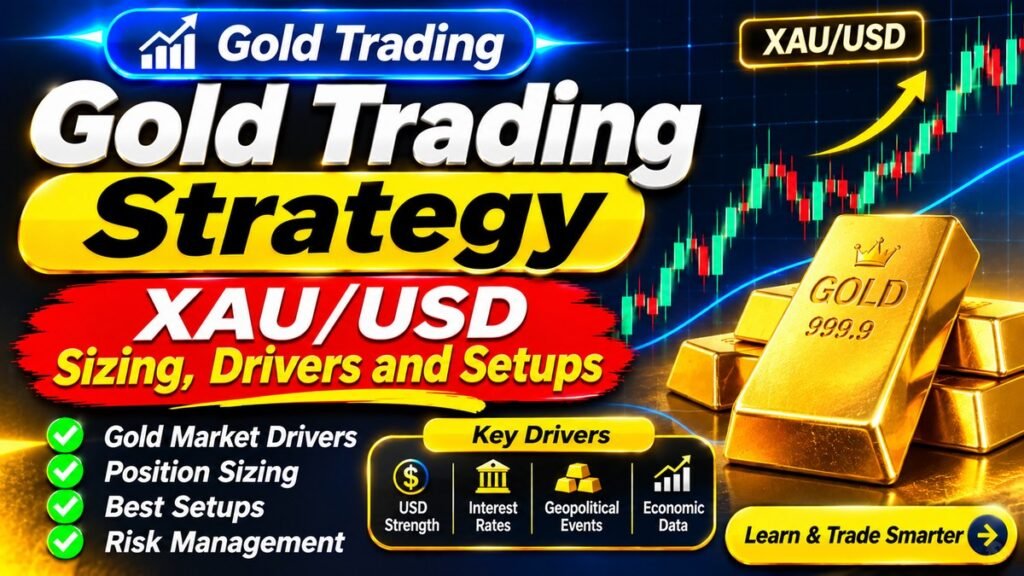
This lesson assembles the section into something usable: a set of rules you could write on one page and follow tomorrow. It is deliberately conservative, because gold punishes ambition faster than any other instrument a retail trader is likely to touch.
Before you trade gold at all
Three conditions worth meeting honestly.
You have consistent position sizing on another instrument. If sizing is still something you think about rather than something you do automatically, gold will find that gap.
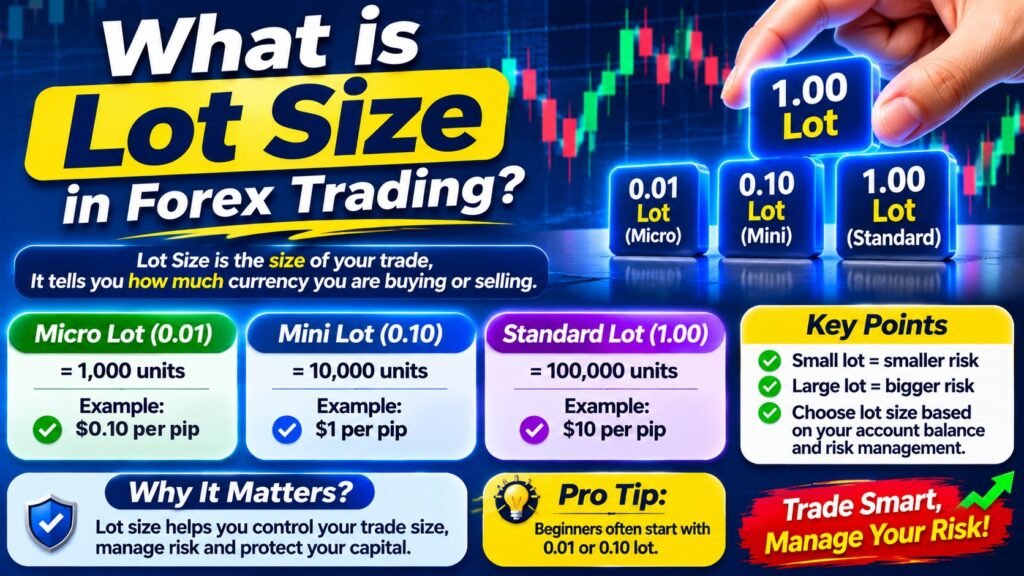
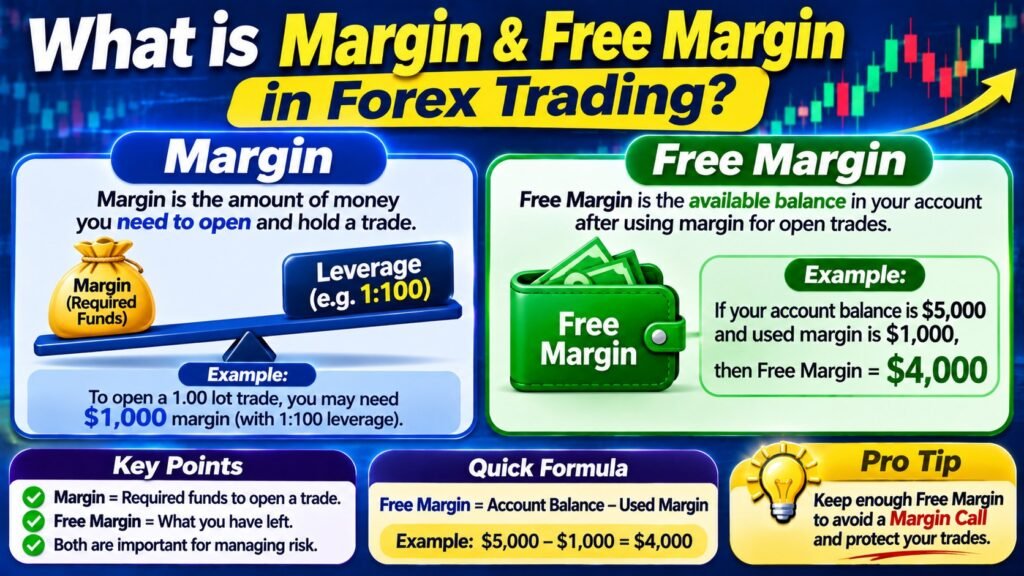
Your account can hold a meaningful gold position at 1% risk. With a $15 stop, 1% risk on a small account produces a micro position. If your broker’s minimum is above what the arithmetic allows, the account is not ready for gold yet — that is not a judgement, just a number.
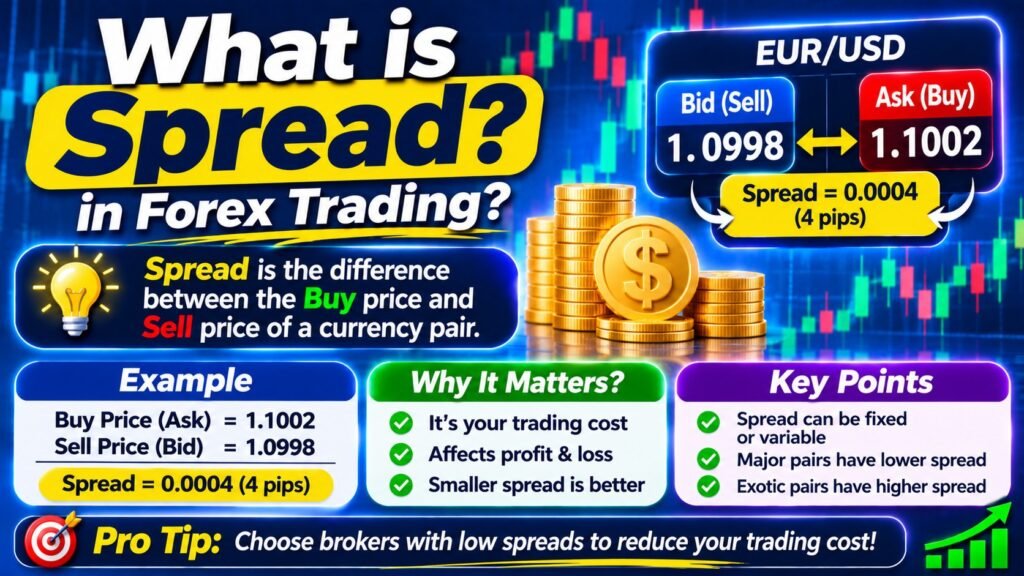
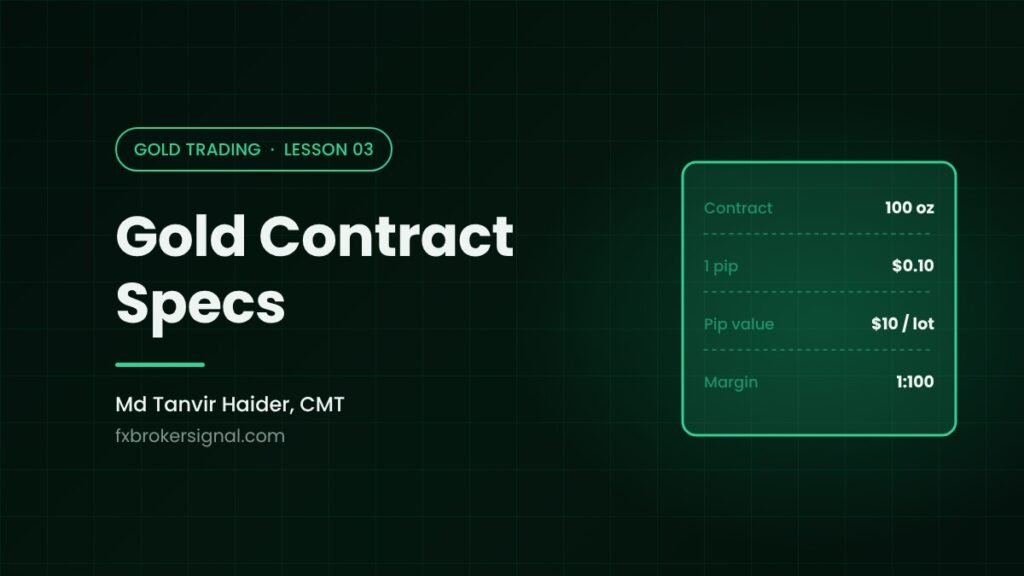
You have completed the broker specification check. Contract size, pip value, margin, swap, symbol name, daily break.
The one-page rule set
INSTRUMENT
XAU/USD only
Symbol confirmed: ____________
Value per $1 move per lot: $____
WHEN
London–NY overlap only
No trading during the daily break
Flat before Fed / CPI / NFP
RISK
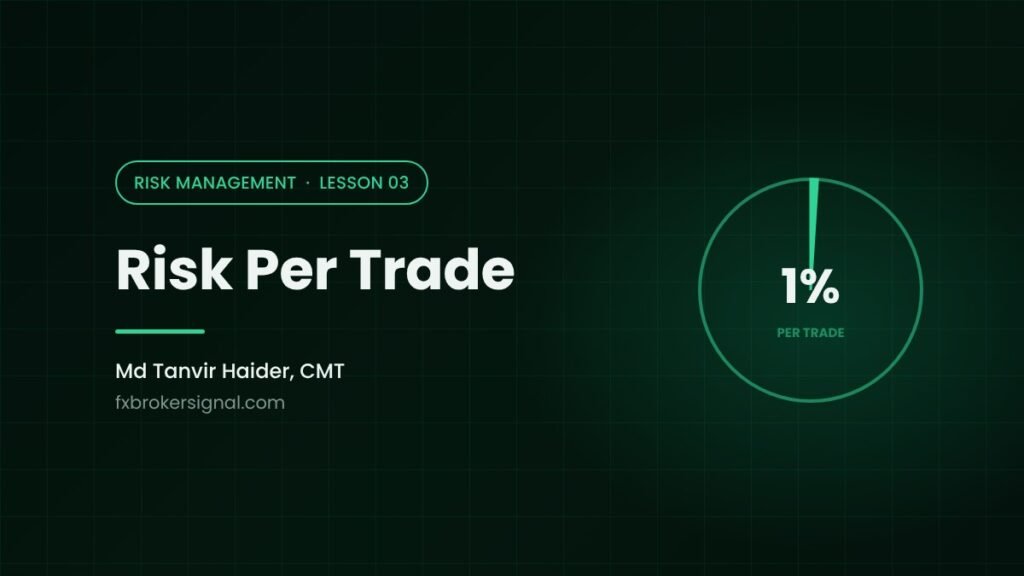
1% per trade, maximum
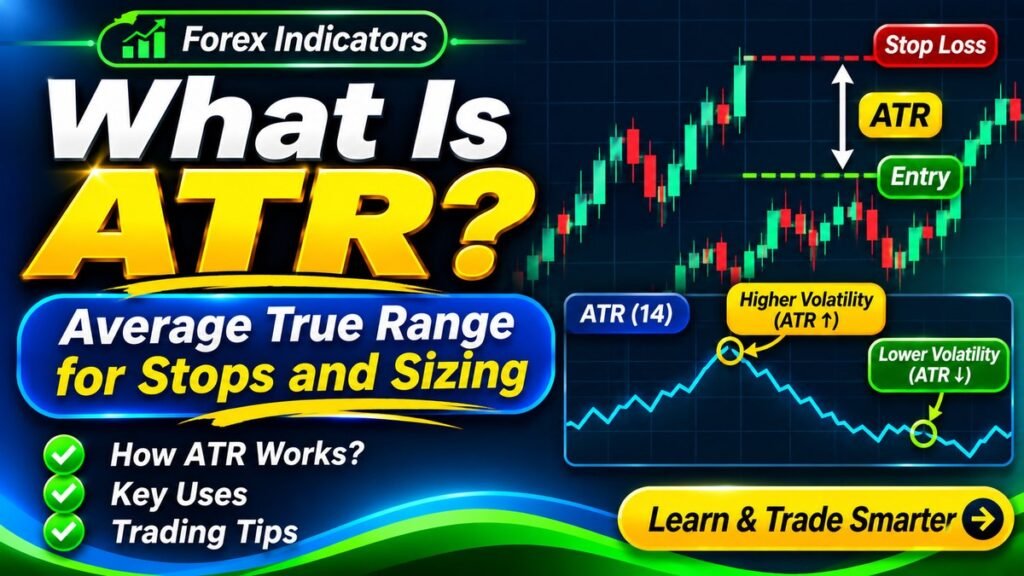
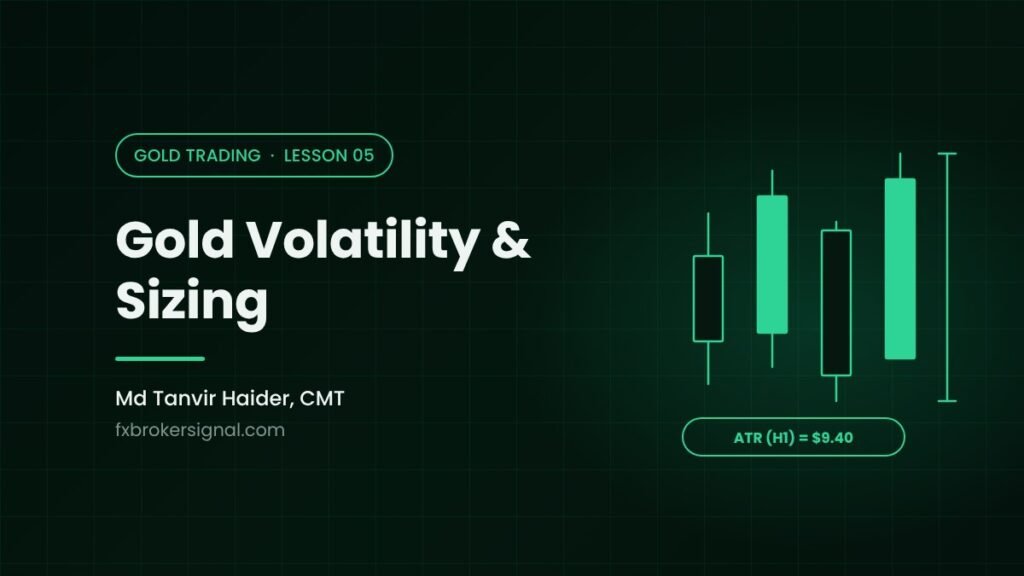
Stop from structure, ≥1.5 × ATR
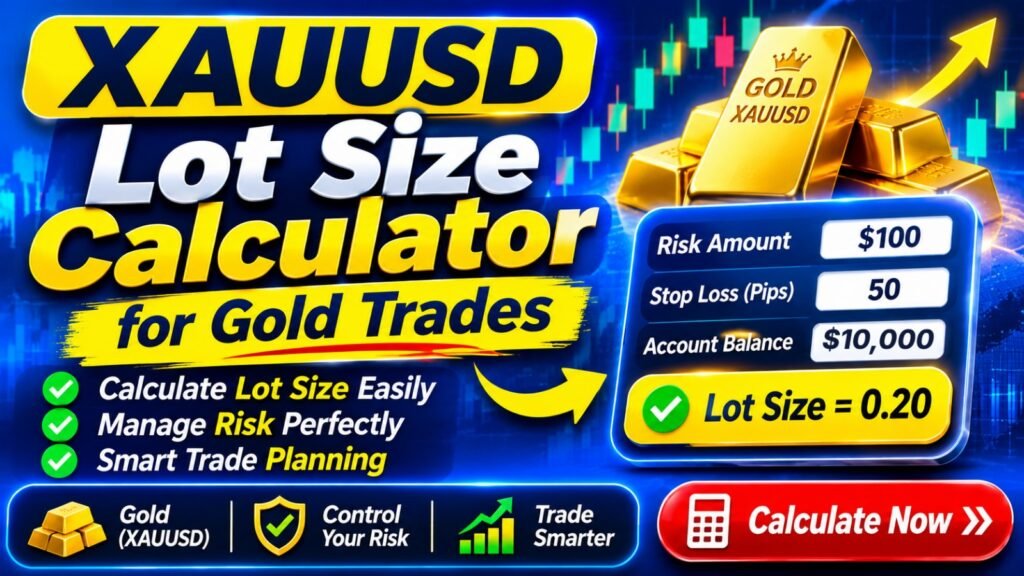
Size = risk ÷ (stop $ × 100)
Daily loss limit: 2 losses, stop
Maximum one gold position open
ENTRY
Daily trend direction established
Price at a marked 4H zone
Rejection or trigger confirmed
Target ≤ 2 × ATR from entry
EXIT
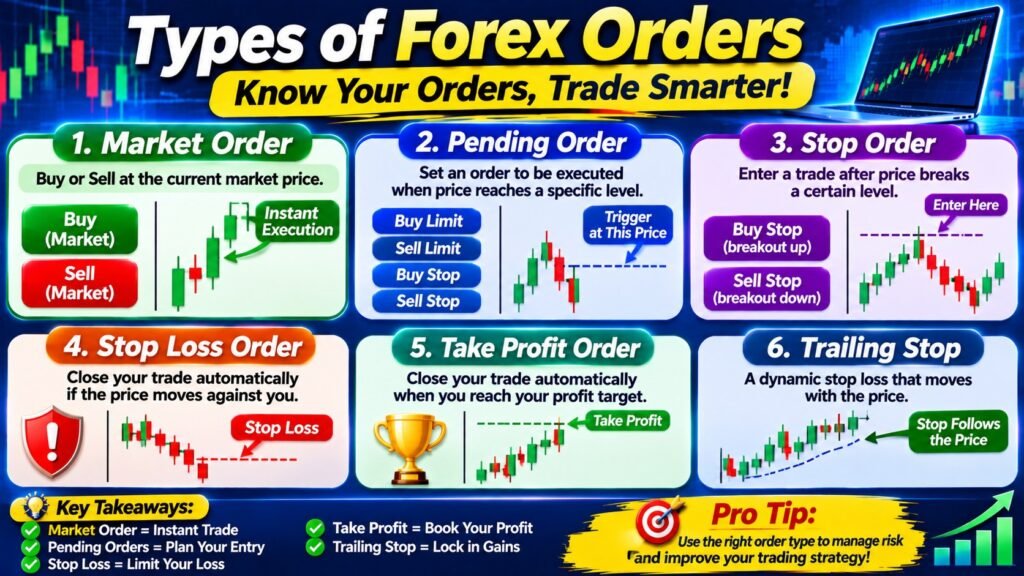
Stop or target. One of each.
No moving the stop wider
No adding to the position
Most of this is restriction rather than instruction, and that is intentional. On gold, what you do not do matters more than what you do.
Building the analysis
Weekly, on the daily chart
Establish trend direction: higher highs and lows, or the reverse, or neither.
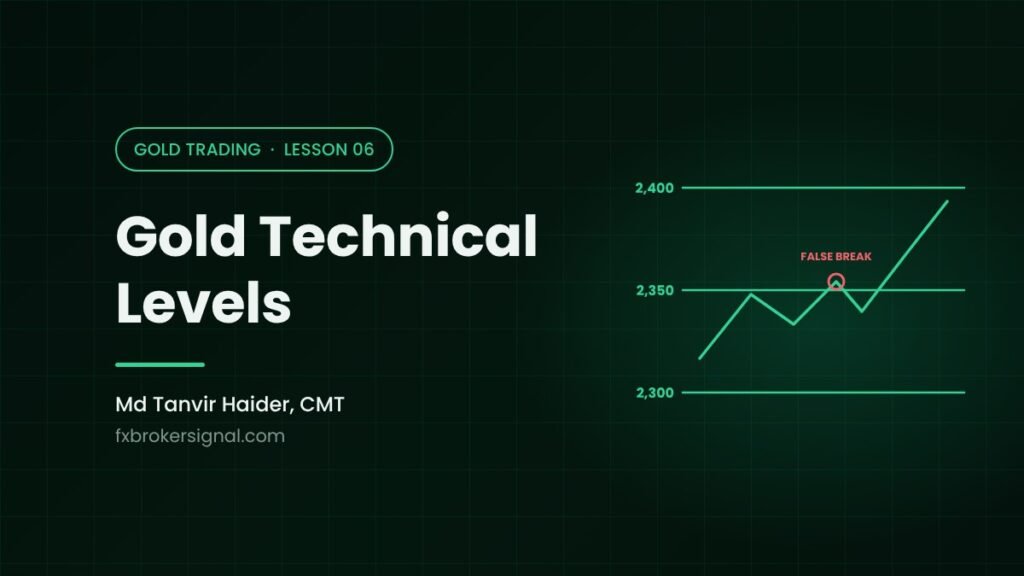
Mark major levels: recent swing highs and lows, hundred-dollar round numbers in range, the prior week’s high, low and close.
Note the daily ATR so you know the current environment.
Check the week’s US calendar and mark the days to avoid.
Note the rate environment — tightening, easing, holding — which gives you a fundamental lean.
Daily, before the session
Mark the Asian session high and low.
Mark the previous day’s high, low and close.
Confirm no high-impact US release in your trading window.
Per trade
Price arrives at a marked zone in the direction of the daily trend. A trigger appears — rejection candle, structure shift on the lower timeframe, whatever your chosen confirmation is, applied consistently.
Stop beyond structure, checked against ATR. Position size from that stop distance. Target checked for realism against ATR.
Then the order goes in and is left alone.
Why one position at a time
A restriction worth defending, since it feels limiting.
Gold at 1% risk with a wide stop already occupies significant margin and significant attention. Two gold positions in the same direction are one 2% position with extra steps.
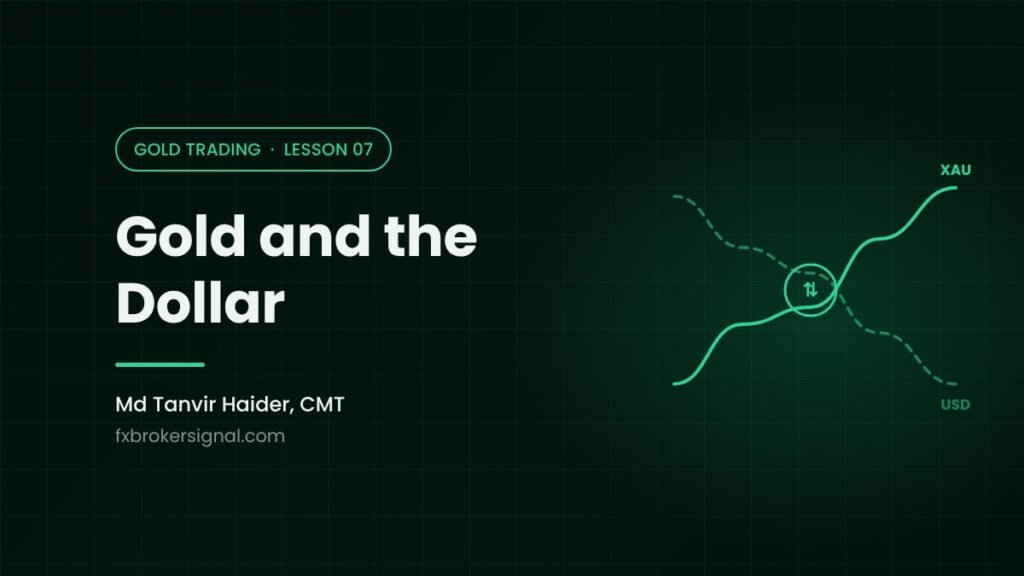
More importantly, gold correlates with other dollar-sensitive instruments. A gold long alongside a EUR/USD long is double dollar exposure. Limiting gold to one position and counting it against your total dollar exposure keeps the actual risk visible.
What to expect, honestly
This approach will produce fewer trades than you want and smaller positions than you expect. It will not produce a rapid account increase, and any approach that promises one on gold is describing leverage rather than skill. What it does produce is survival through the periods that remove most gold traders — and survival is the prerequisite for everything else.
Reviewing your gold trading
A monthly review, thirty minutes, focused on process rather than profit.
Did every position size come from the calculation? Any trade where you rounded up is worth noting.
Did any stop get moved wider? This should be zero.
Did you trade outside your window? How many, and what were the results compared with in-window trades?
Did you trade through a scheduled release? Count them.
What was the average stop distance as a multiple of ATR? If it is drifting below 1.5, your stops are tightening without you deciding to.
The useful finding from this review is almost never about analysis. It is about which rules are being followed and which are quietly eroding.
Where signals fit
Many readers will trade gold partly or entirely from signals, including ours.
The honest framing is the same one used throughout this Academy: a signal is a trade idea, not an instruction. It contains an entry, a stop and a target. It does not contain your account balance, your existing dollar exposure, or how many losses you have taken today.
Our gold signals use one entry, one stop and one target with a full close. That structure is deliberate — it makes the risk arithmetic checkable before you act. Before taking any gold signal, the check is: what position size does this stop distance produce at 1% of my account, am I already exposed to the dollar elsewhere, and is there a US release in the next thirty minutes.
If the answers work, the signal is usable. If they do not, skipping it costs nothing — there will be another.
For traders who find manual execution difficult across timezones, Telegram Trade Linker handles execution from Telegram to MT4 or MT5 without a VPS, with risk controls and daily loss limits configurable in advance. It removes execution error, which is a real category of loss. It does not remove the need to decide your risk per trade, and it should not.
Closing the section
Gold rewards preparation and punishes improvisation more sharply than any currency pair. The specific things this section asked you to do — check the pip convention, size from the stop, use one session, avoid the big releases, keep one position — are not sophisticated. They are the difference between an account that survives and one that does not.
The analysis content in this Academy will make you better at reading gold. The risk content will determine whether you are still trading it in a year.
What to do next
The Risk Management section covers the sizing, exposure and drawdown material referenced throughout this section in full detail. If any part of the position sizing here felt unfamiliar, start there.
The Trading Psychology section addresses the execution problems — revenge trading, moving stops, abandoning rules under pressure — that no amount of analysis prevents.
For daily gold and forex analysis, the Daily Market Analysis pages cover current levels and context. Our free Telegram community is open if you want to follow along.
Frequently asked questions
How do I start trading gold safely?
Confirm your broker’s contract specifications, trade one session window, risk a fixed small percentage per trade with stops sized from structure and ATR, avoid the major US releases, and hold one position at a time. Most of a workable gold approach is restriction rather than technique.
How much account do I need to trade gold?
Enough that 1% risk with a realistic stop produces a position at or above your broker’s minimum. With a $15 stop, 1% risk needs to cover $1,500 per standard lot — work backward from that to see whether your account and minimum lot size are compatible.
Should I hold more than one gold position?
No. Two positions in the same direction are one larger position with extra steps, and gold also correlates with other dollar-sensitive instruments, so a second gold trade compounds exposure you may already hold elsewhere.
What should I review in my gold trading?
Process rather than profit — whether every size came from the calculation, whether any stop was moved wider, how many trades fell outside your session window, and whether your average stop distance is drifting below your ATR minimum.
Can I trade gold from signals?
Yes, treating each as a trade idea to evaluate rather than an instruction. Check what position size the stop distance produces at your risk percentage, whether you already hold dollar exposure, and whether a US release is imminent before acting.
What results should I expect from gold trading?
Fewer trades and smaller positions than you probably want. Any approach promising rapid account growth on gold is describing leverage rather than skill. A conservative approach produces survival through the periods that remove most gold traders.