
Gold Trading Strategy — XAU/USD Sizing, Drivers and Setups
October 31, 2026
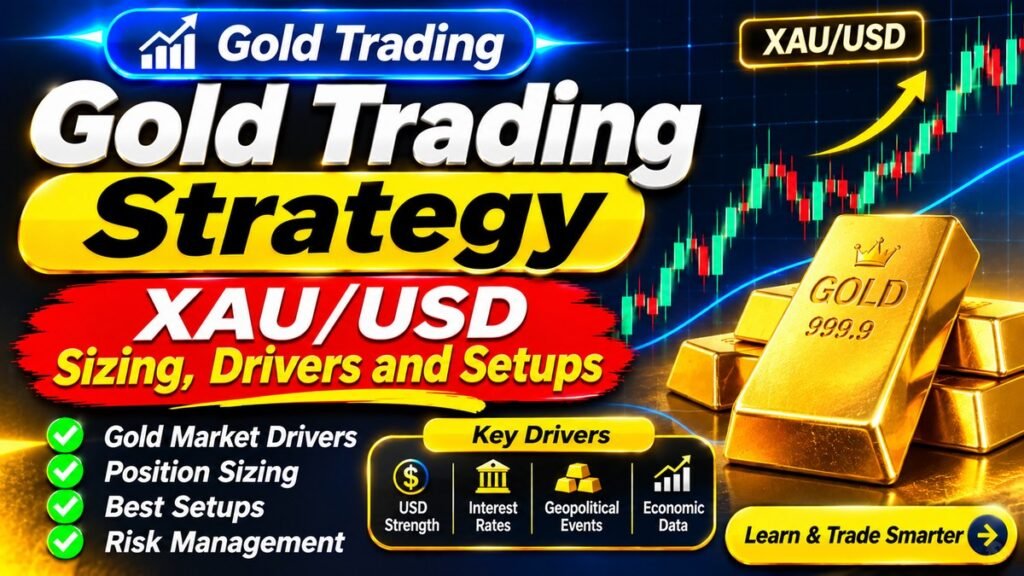
Gold is the instrument most likely to damage an account that treats it like a currency pair. It moves two to three times as far, responds to different drivers, and punishes position sizes that would be perfectly reasonable on EUR/USD. Understanding those differences is most of what separates profitable gold trading from expensive gold trading.
Gold has been a primary focus of my own analysis for most of my career, and it is the instrument I see newer traders mishandle most often — almost always in the same specific way.
What XAU/USD actually is
XAU is the ticker for one troy ounce of gold. XAU/USD shows its price in US dollars — at 2,310, one ounce costs $2,310.
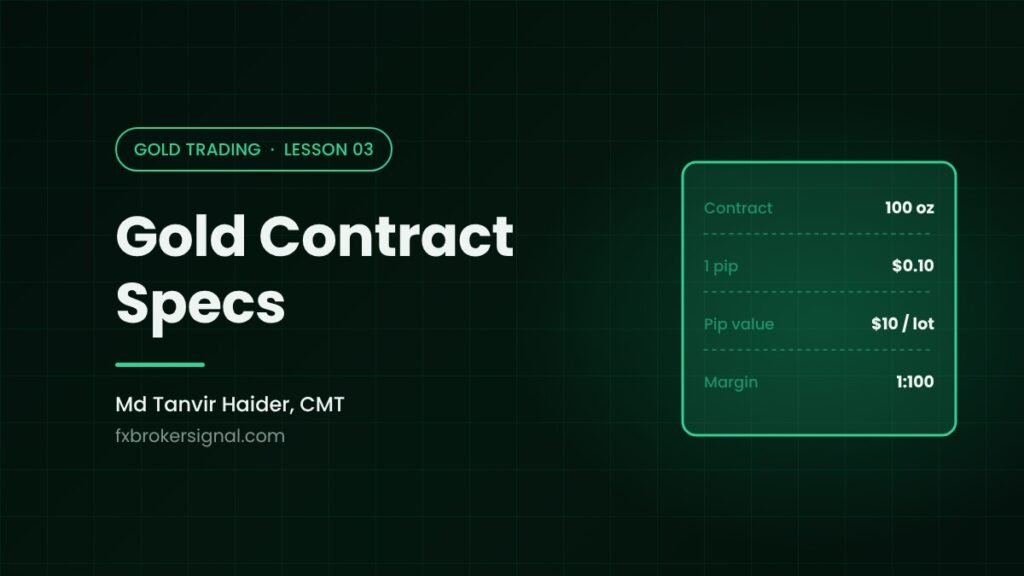
It trades on forex platforms using identical mechanics: lots, pips, leverage, margin. But a pip on gold is conventionally the second decimal — a move from 2310.00 to 2310.01 — and lot sizes represent ounces rather than currency units.
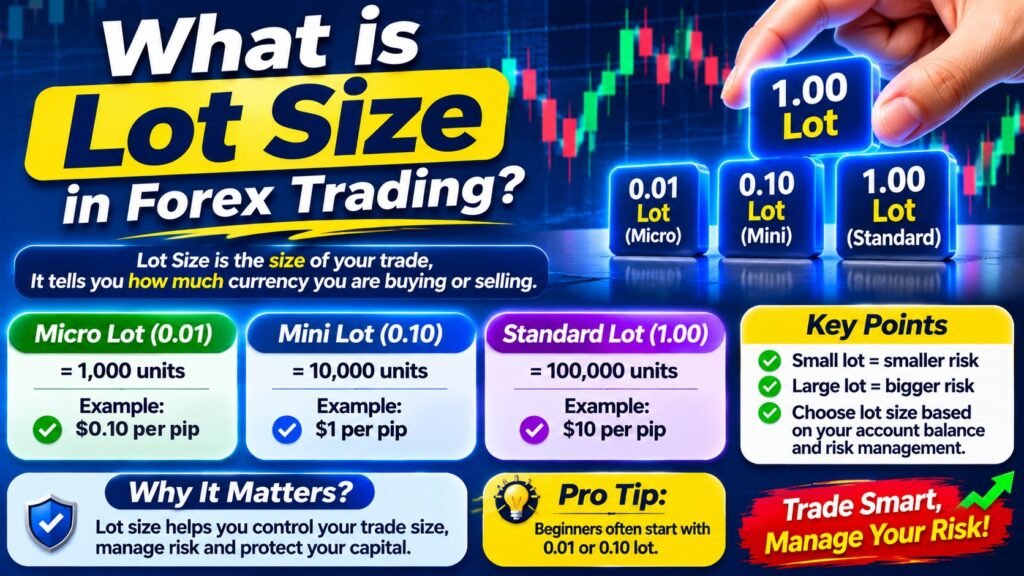
Standard lot: 100 ounces
Mini lot: 10 ounces
Micro lot: 1 ounce
On 1 standard lot, a $1 move in gold
is $100 profit or loss.
Check your broker’s specification — contract sizes for gold vary more between brokers than they do for currency pairs.
The volatility problem
This is the central issue, and it causes more damage than any analytical error.
| Instrument | Daily range as % of price |
|---|---|
| EUR/USD | ~0.6 – 0.8% |
| GBP/USD | ~0.7 – 0.9% |
| XAU/USD | ~1.0 – 1.8% |
Gold routinely moves two to three times as far as a major currency pair in percentage terms. During periods of stress it moves considerably more.
The consequence is direct: the same lot size on gold carries two to three times the risk it does on EUR/USD. A trader comfortable with 0.10 lots on a major pair, applying the same figure to gold, has tripled their exposure without intending to.
The single most common gold mistake
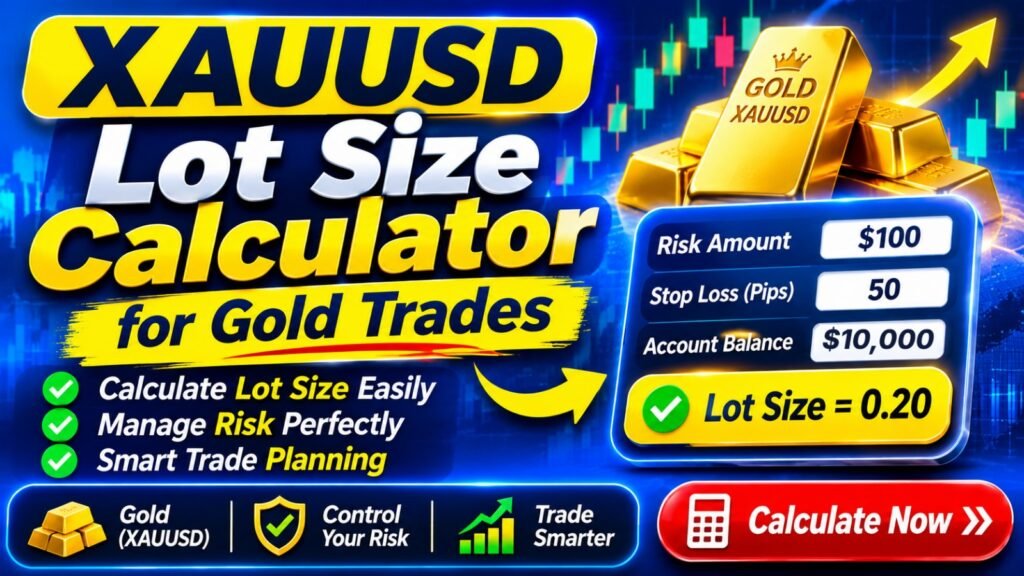
A trader has been sizing positions on EUR/USD for months and has a lot size that feels right. They move to gold, use the same number, and take a normal loss that turns out to be three times larger than expected. This is not an analytical failure — it is a sizing failure, and it is entirely preventable by running the calculation for gold separately. Run the Lot Size calculator fresh for every instrument, every time.
What actually moves gold
Gold does not respond to a single country’s economic data the way a currency pair does. Four drivers dominate.
Real interest rates
The most important driver over any meaningful timeframe.
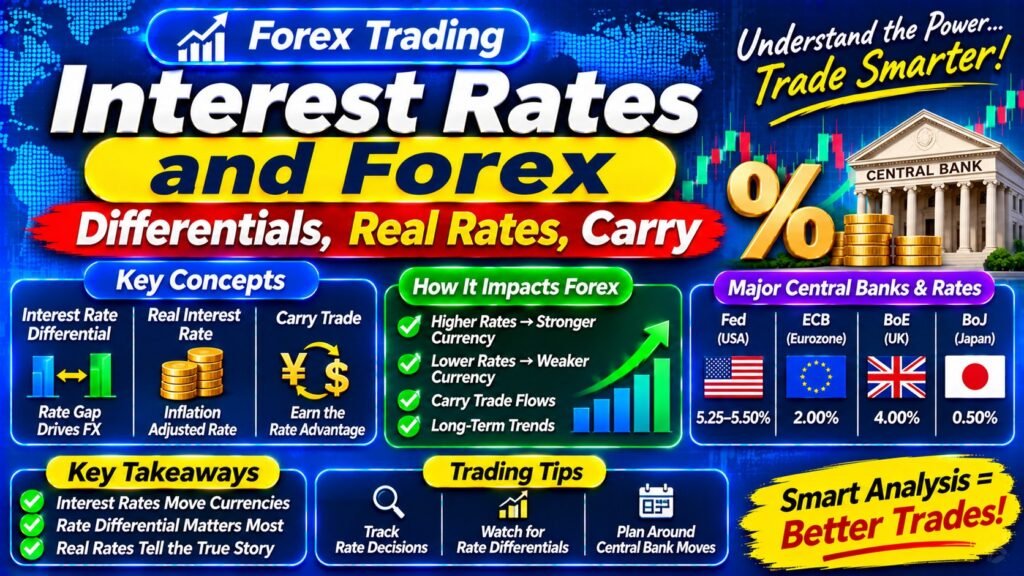
Gold pays no interest. When real rates — nominal rates minus inflation — are high, holding interest-bearing assets is more attractive and gold typically weakens. When real rates are low or negative, that disadvantage disappears and gold usually strengthens.
This is why Federal Reserve decisions and US inflation data move gold sharply, even though gold is not a US asset.
US dollar strength
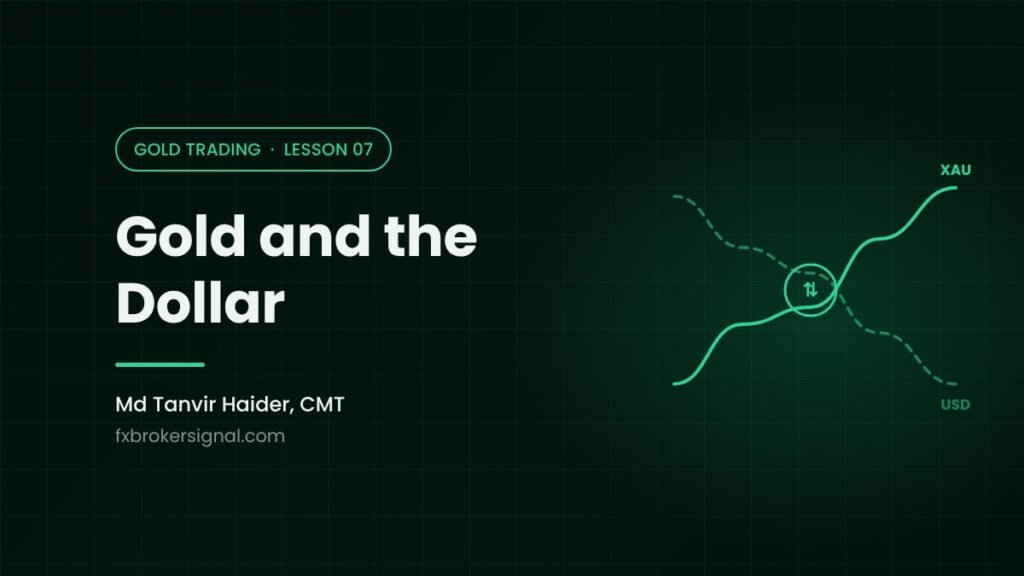
Gold is priced in dollars, so a stronger dollar mechanically makes gold more expensive in other currencies, reducing demand.
The inverse relationship with the dollar is genuine but not absolute. Both can rise together during acute risk events, when capital seeks both safe-haven assets simultaneously. Treating the correlation as a rule rather than a tendency produces confusion at exactly the moments that matter most.
Risk sentiment
Gold is a traditional safe haven. Geopolitical escalation, banking stress and equity market declines often drive capital toward it.
This driver is unpredictable by nature and can override the others entirely for days at a time.
Central bank demand
Central banks have been substantial net buyers of physical gold in recent years. This provides underlying support but operates on a timeframe irrelevant to most trading decisions.
When gold moves
Gold has clear session characteristics.
Asian session — generally quiet, narrow ranges. Some physical demand flow but limited directional movement.
London session — activity increases significantly. London remains the centre of physical gold trading, and the London fix draws genuine order flow.
London–New York overlap — the most active window by a clear margin. US data releases land here, and this is where most of gold’s daily range typically develops.
For most gold traders, the overlap is the session that matters. Trading gold during the Asian session generally means wider spreads and limited movement.
A gold trading framework
Timeframes: Daily for direction
4-hour for entry
Session: London and overlap
Context: Check US calendar — rate
decisions, CPI, NFP
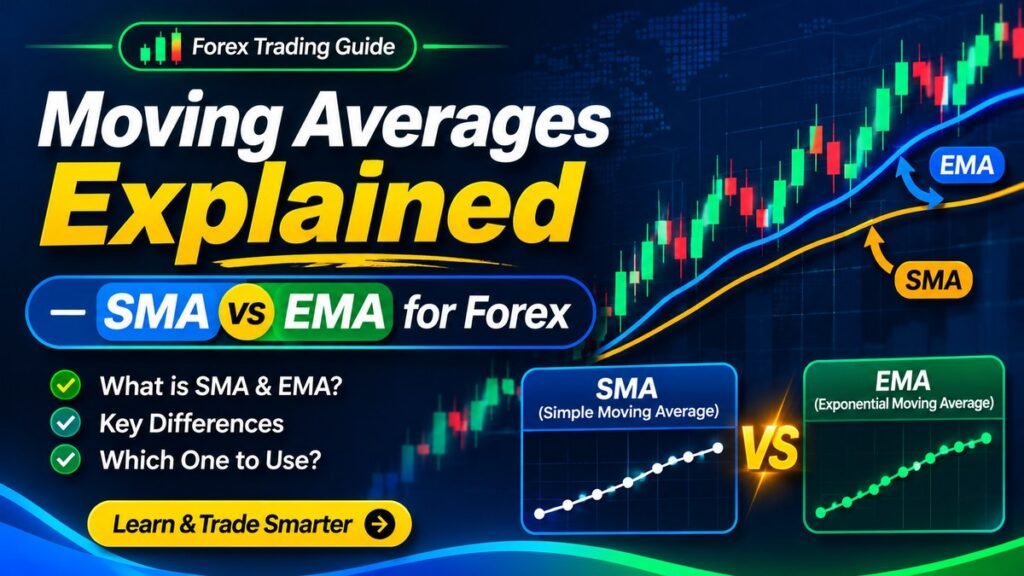
Direction: Daily price vs 200 EMA
Regime: Daily ADX above 25
Entry: 4-hour pullback to a daily level
or the 50 EMA, with a rejection
candle
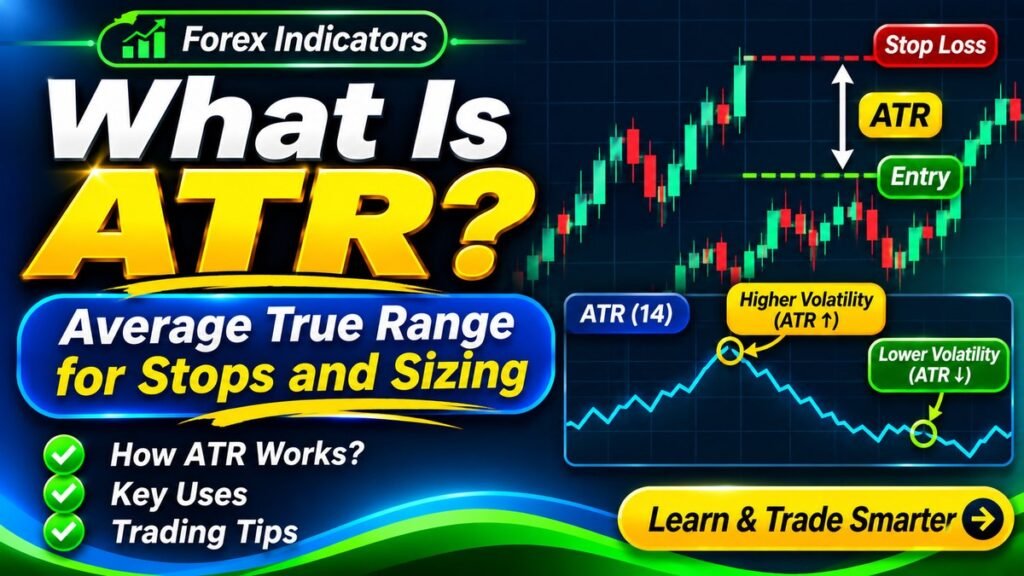
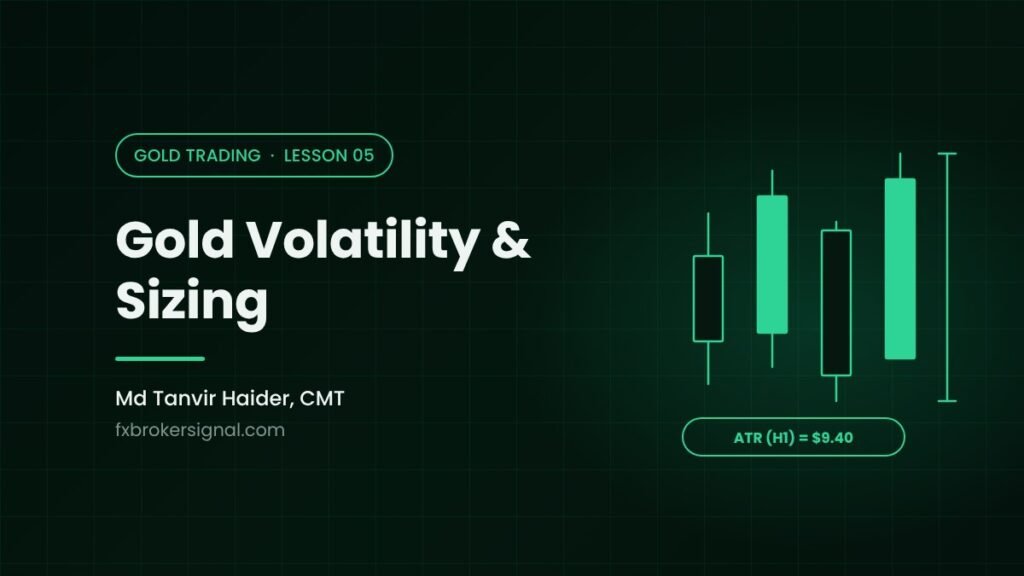
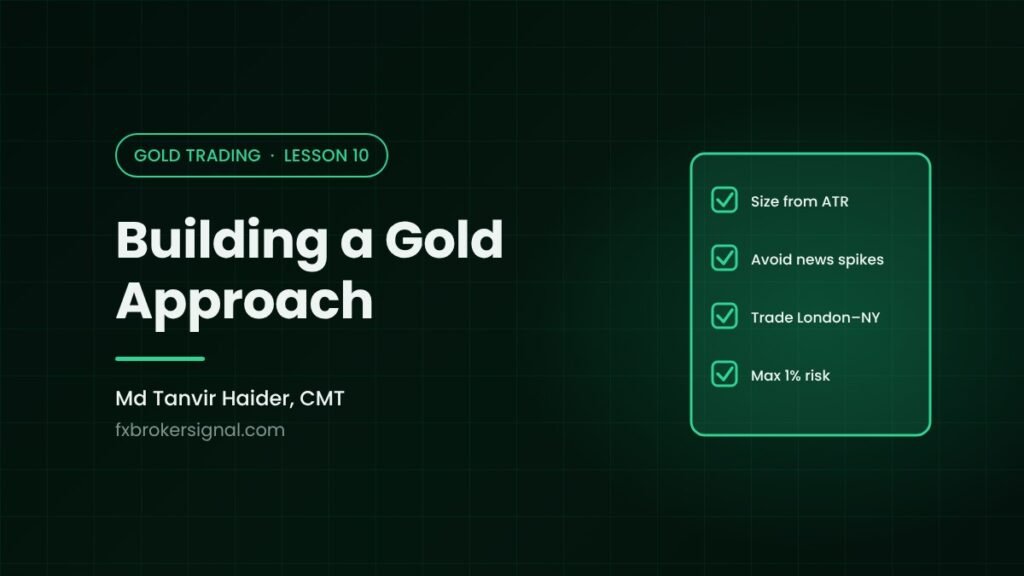
Stop: 2 × daily ATR — genuinely wide
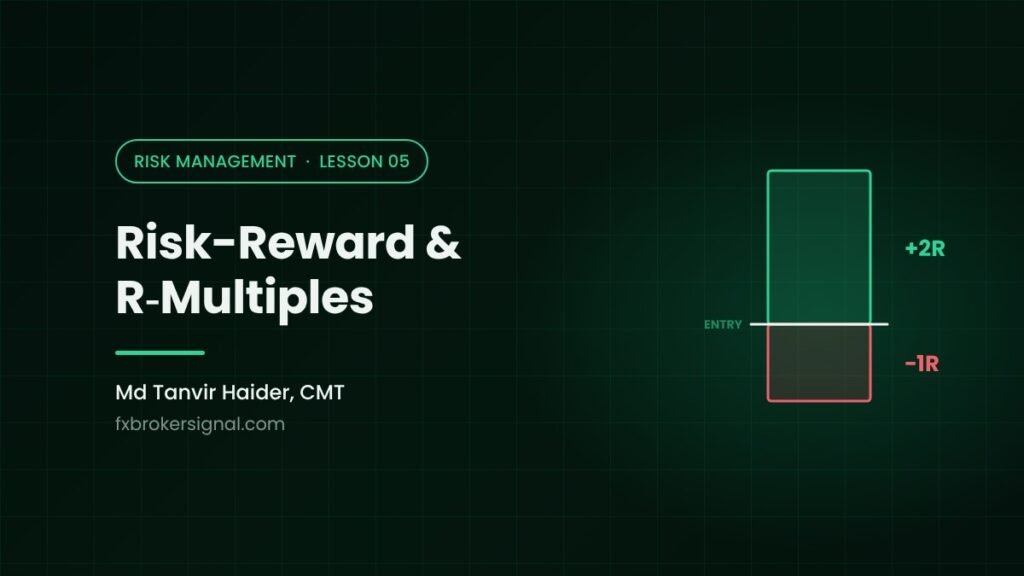
Target: 2 × stop distance
Risk: 1% — calculated separately
for gold, never copied from FX
Exit: One stop, one target, full close
The two lines that matter most are the stop and the sizing. Gold requires wider stops than currency pairs — a stop that would be generous on EUR/USD sits inside gold’s normal noise. Wider stop means smaller position, which is exactly correct.
Round numbers
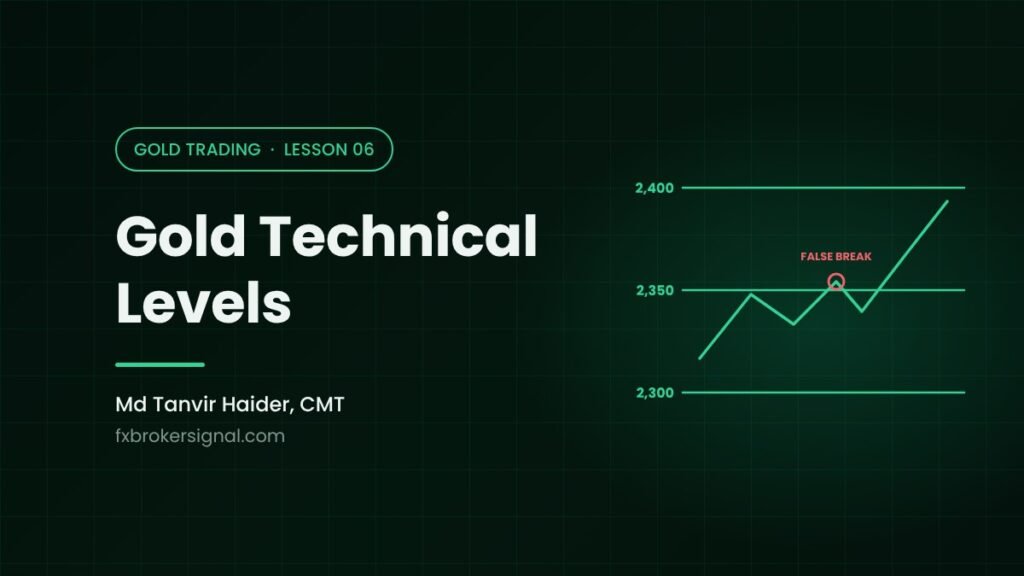
Gold respects large round numbers more consistently than most currency pairs.
Levels at $2,300, $2,350, $2,400 attract genuine order flow — from retail traders, from institutional desks, and from options positioning. Price frequently stalls, reverses or accelerates around them.
This is worth incorporating into both entry and target selection. A target set just before a major round number is more likely to be reached than one set just beyond it.
Where gold trading fails
Position sizing copied from currency pairs. Covered above, and by far the most common and most damaging error.
Stops that are too tight. A 30 pip stop on gold is inside normal fluctuation. Traders who apply currency-pair stop distances are stopped out constantly on sound analysis.
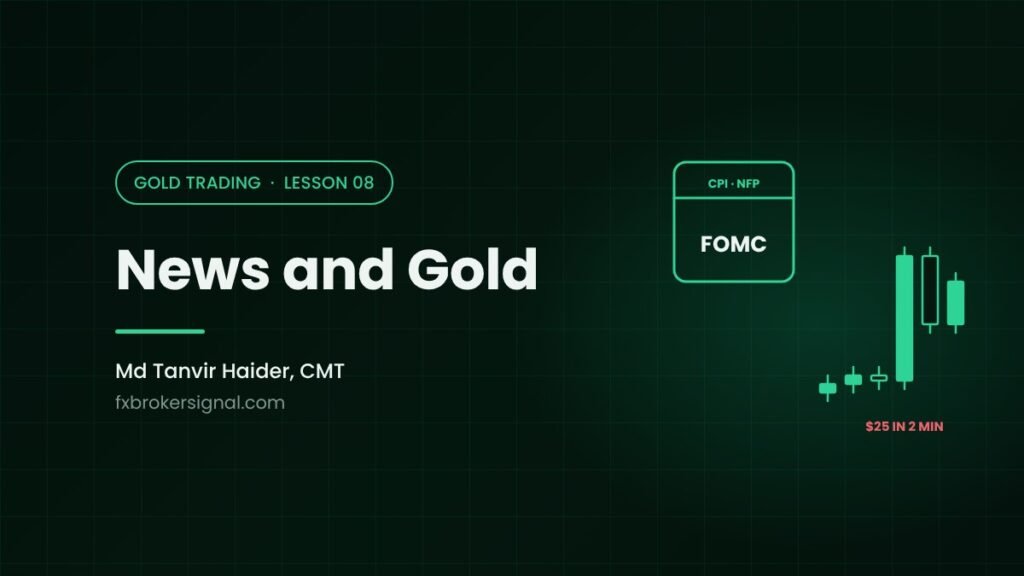
Trading through US data. Gold reacts violently to CPI and rate decisions. Holding a tight-stopped position through one is avoidable risk.
Assuming the dollar inverse always holds. It is a tendency, not a rule, and it breaks during exactly the high-stress periods when traders rely on it most.
Overtrading the volatility. Gold moves enough to make every hour look like an opportunity. It is not.
Is gold right for you?
Gold suits traders who have mastered position sizing on currency pairs first, can tolerate larger swings without interfering, and follow the US economic calendar.
It does not suit beginners still developing sizing discipline. The volatility that makes gold attractive is the same volatility that punishes an oversized position, and it does so faster than any major currency pair.
My suggestion, consistently: learn on EUR/USD, prove you can size correctly across fifty trades, then add gold with the sizing calculated fresh. Traders who reverse that order usually pay for the lesson.
What to do next
You now have the major strategies covered, including the instrument-specific considerations for gold.
The final lesson in this section addresses how to choose between these approaches and build a complete trading plan from them.
Frequently asked questions
Is gold harder to trade than forex pairs?
Not analytically, but it is less forgiving. Gold moves two to three times as far as a major pair in percentage terms, so the same position size carries two to three times the risk. Most gold losses among newer traders are sizing errors rather than analytical ones.
What lot size should I use for gold?
Calculate it fresh from gold’s own volatility rather than copying a figure from currency pairs. With a wider ATR-based stop, the correct gold position will be substantially smaller than your usual forex size for the same 1% risk.
What moves the price of gold?
Real interest rates are the dominant driver, followed by US dollar strength, risk sentiment during geopolitical or financial stress, and central bank buying. US inflation data and Federal Reserve decisions move gold sharply.
What is the best time to trade gold?
The London session and particularly the London–New York overlap, roughly 13:00 to 17:00 GMT. Most of gold’s daily range develops here, and US data releases land in this window. The Asian session is generally quiet with wider spreads.
Does gold always move opposite to the US dollar?
Usually, but not always. The inverse relationship is a tendency rather than a rule, and it breaks during acute risk events when capital seeks both safe-haven assets simultaneously. Treating it as absolute causes confusion at the moments that matter most.
Why do my gold stops keep getting hit?
Almost certainly because the stops are too tight for the instrument. A stop distance that is generous on EUR/USD sits inside gold’s normal fluctuation. Use an ATR-based stop calculated on gold itself, and reduce position size accordingly.